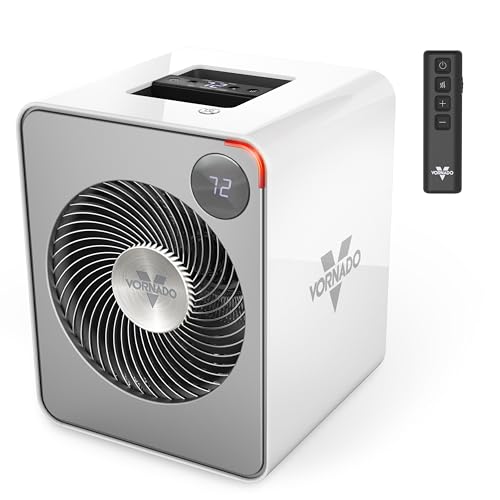
The cleanest brand contrast in the category: one tells you the numbers and commits less, the other commits more and will not tell you the numbers.
By Scooter M. · Published October 3, 2026 · Last reviewed October 3, 2026
How this page is funded: we earn a commission if you buy through the links here, at no extra cost to you. Picks are chosen before links are attached, which is why every roundup names something to skip. Full disclosure.
Lasko publishes wattages, coverage figures and an ETL mark, and warrants its heaters for three years. Vornado publishes no wattage, no coverage and no listing mark, and warrants its heaters for five with better safety hardware. Buy Lasko if you want to compute things; buy Vornado if you want it to last.
The contrast in one table
These two brands fail and succeed at almost exactly opposite things, which makes the comparison unusually clean. Everything below is from each maker's own product pages or the retail listing, cited on the individual pick cards.
Lasko
Vornado
Units we track
4
2
Rated wattage published
Yes — including low settings on 3 of 4
No — Vornado publishes settings, not watts
Coverage claim published
Yes — 150 sq ft on two units
No — none on either unit
Safety listing named
ETL on 3 of 4
No — neither unit names a mark
Thermostat set-point in degrees
No — dials on all 4
No — knob or “Auto-Climate”
Tip-over switch published
On some units, not all
Yes, on both
Warranty
3 years
5 years
Typical price
Lower
Higher
Counted across the four purchasable units we track from these two brands. “Publishes” means the figure appears on the maker's own page or the retail listing, not that we inferred it.
Four of those eight rows are a Lasko win and four are a Vornado win, and they are not the same kind of win. Lasko's are all disclosure: it tells you what the thing does, which is what lets you compute a cost, check a coverage claim against the sizing rule, and confirm a safety listing before you buy. Vornado's are all commitment: longer warranty, tip-over protection published on every unit, and a cool-touch metal cabinet.
Why Vornado not publishing wattage is a real problem
It sounds like a quibble. It is not, because wattage is the only input to every number that matters. Running cost is watts × hours × rate. Coverage is watts ÷ 10 per square foot. Circuit fit is watts ÷ 120 volts. With no published wattage, all three of those are unavailable from the manufacturer, and the 1,500 W figure we use for both Vornado units on this site comes from the retail listings rather than from Vornado.
Vornado's position is that it sells air circulation rather than watts, and there is something to that — a Vortex heater genuinely distributes heat more evenly than a unit that aims a hot jet at your shins. But evenness is a comfort property, not an output one. The heat is still 1,500 W and about 5,118 BTU/h, exactly like everything else in the category, and no amount of circulation changes the total.
Where Lasko is genuinely better
The low settings are published, so the cheap mode is costable. Three of the four Lasko units publish a 900 W step alongside the 1,500 W maximum. That means 16.5 cents an hour instead of 27.5, and 7.5 A instead of 12.5 — the second figure matters because it is the difference between fitting on a shared circuit and not. Vornado publishes "3 heat settings" and no wattages, so only the maximum can be costed and only by taking the retailer's number for it.
The coverage claim is checkable and it checks out. Lasko publishes 150 sq ft for the 755320 and the 751320. At 10 W per square foot, 1,500 W is 150 sq ft. The claim and the arithmetic agree exactly, which is rarer in this category than it should be — several makers publish coverage figures 1.7 times our own.
And ETL is named rather than left to the rating plate. Three of four Lasko units state the mark on Lasko's own product page. ETL and UL test to the same standard, so this is not a quality claim — it is a disclosure one, and Vornado names nothing on either unit.
Where Vornado is genuinely better
Tip-over protection on both units, published. Lasko's coverage of this is inconsistent: the 754201 and the Ellipse units publish a tip-over switch, the 751320 does not — and at 5.67 lb and 22.5 inches tall, the 751320 is the shape that most wants one. Vornado publishes tip-over protection plus an automatic shut-off on both units we track. Why the cutoffs matter and which is which.
Auto-Climate Control is a better thermostat than a dial, even without a published set-point. The VMHi500 adjusts output to hold a temperature rather than running flat out until a bimetallic strip opens, and it pairs that with a 1–12 hour timer. Neither brand lets you set an actual number — if that is what you want, Dreo publishes 41–95°F in 1°F steps and neither of these two does.
The metal cabinet is a real difference in a shared room. Cool-touch powder-coated metal on the VMHi500 against moulded plastic on the Laskos is the one build distinction visible without a lab, and in a living room with children or animals it is the kind of thing that justifies the price gap on its own.
What they cost to run
Identically, at the same wattage — which is the point. The only reason the two columns can differ at all is that Lasko publishes a 900 W setting and Vornado does not publish any setting's wattage.
Wattage
Per hour
2 h
4 h
8 h
900 W
16.5¢
$0.33
$0.66
$1.32
1,500 W
27.5¢
$0.55
$1.10
$2.20
Computed at 18.34¢/kWh — the U.S. residential average for June 2026 (EIA, Electric Power Monthly, Table 5.6.A, released August 26, 2026). Your rate is on your own bill; substitute it and the arithmetic still holds. Figures assume full output for the whole period.
This is the most recent month EIA has published. Residential rates move seasonally and vary enormously by state — from roughly a dime per kilowatt-hour in parts of the South to more than 40¢ in Hawaii — so treat it as a national reference point, not as your rate.
The units
Quick picks
Ranked for fit, not for hype. Coverage and current draw are computed from each unit’s published wattage. Tap a row for the full write-up, or go straight to the listing.
#
Product
Best for
Covers
Draw
Price
1
Lasko 755320A 23-inch digital tower with a thermostat, an 8-hour timer and a remote — and the only heater here whose published coverage figure lands exactly where our own sizing rule puts it.
The maker's coverage claim that matches the arithmetic
Lasko 754201The 900 W low setting is the whole point: it is the rare listing that publishes both settings, so you can compute what the cheap mode actually costs instead of guessing.
Vornado VMHi500The current top of Vornado's metal line: auto-climate control, two LED displays and a 1-12 hour timer in a cool-touch metal box, backed by five years.
Vornado VMHi300The in-stock Vornado: a powder-coated metal cabinet, vortex circulation and a five-year guarantee, with mechanical dials instead of a screen.
Top pick · The maker's coverage claim that matches the arithmetic
Lasko 755320 Oscillating Digital Ceramic Tower Heater (23 in)
A 23-inch digital tower with a thermostat, an 8-hour timer and a remote — and the only heater here whose published coverage figure lands exactly where our own sizing rule puts it.
Rated power
1,500 W / 900 W low
Covers (computed)
150 sq ft
Draw (computed)
12.5 A at 120 V
Cost per hour
27.5¢
Coverage at 10 W/sq ft, average insulation, 8 ft ceiling = 5,118 BTU/h. Cost at 18.34¢/kWh; an eight-hour night at full output is $2.20. Exceeds the 12 A continuous limit of a 15 A circuit — check what else shares the breaker.
What works
Lasko publishes 150 sq ft, and 1,500 W at 10 W per square foot is 150 sq ft — the claim and the arithmetic agree exactly, which almost never happens
A published 900 W low setting, so the economical mode has a computable cost
Digital thermostat, 8-hour timer and a remote at a price where a two-position knob is the norm
What does not
No child lock published, which rules it out of a nursery on this site's criteria
Tall, narrow and 7 lb — that is a tipping profile, and there is no published tip-over cutoff in Lasko's specification
Oscillation and a fan mean it is audible; the silent types are elsewhere in this roundup
Published specification
Rated power
900 W to 1,500 W (Lasko's published range)
Heat settings
Two
Thermostat
Adjustable, with a digital display
Oscillation
Yes
Timer
8 hours
Remote
Included, with onboard storage
Size
23" H x 7.25" D x 7.00" W, 7.29 lb
Safety
Cool-touch housing, automatic overheat protection
Warranty
3 years
Heat type
Ceramic (PTC)
Maker’s coverage claim
150 sq ft
Safety listing
ETL listed, stated on Lasko's own product page.
Who it is for
A home office, family room or bedroom at or under 150 sq ft where you want a real thermostat and a timer without paying for a metal cabinet.
What it is not for
A nursery, or a room where a curious pet or toddler can reach it. No child lock and no published tip-over switch is the wrong combination at floor height.
The 900 W low setting is the whole point: it is the rare listing that publishes both settings, so you can compute what the cheap mode actually costs instead of guessing.
Rated power
1,500 W / 900 W low
Covers (computed)
150 sq ft
Draw (computed)
12.5 A at 120 V
Cost per hour
27.5¢
Coverage at 10 W/sq ft, average insulation, 8 ft ceiling = 5,118 BTU/h. Cost at 18.34¢/kWh; an eight-hour night at full output is $2.20. Exceeds the 12 A continuous limit of a 15 A circuit — check what else shares the breaker.
What works
Both wattages are published, which is what makes an honest cost comparison possible
9 inches tall: it fits under a desk without being in the way
Manual top-mounted controls — nothing to relearn, nothing to lose the remote for
What does not
A dial thermostat with no numbers on it: you cannot set 68°F, only “about there”
No child lock, so the dial is reachable by anyone who can reach the unit
Fan noise is the price of a small ceramic unit moving 1,500 W of heat
ETL listed, per Lasko's published specification — one of the few in this roundup that names a mark rather than leaving it to the rating plate.
Who it is for
A desk, a small office, a dorm room — somewhere you want heat on a person rather than in a room.
What it is not for
A nursery, and not unattended use. It publishes a tip-over switch and overheat protection, but no child lock — and the USFA's advice to switch a heater off when you leave the room applies to every unit on this site, listed or not.
The current top of Vornado's metal line: auto-climate control, two LED displays and a 1-12 hour timer in a cool-touch metal box, backed by five years.
Rated power
1,500 W
Covers (computed)
150 sq ft
Draw (computed)
12.5 A at 120 V
Cost per hour
27.5¢
Coverage at 10 W/sq ft, average insulation, 8 ft ceiling = 5,118 BTU/h. Cost at 18.34¢/kWh; an eight-hour night at full output is $2.20. Exceeds the 12 A continuous limit of a 15 A circuit — check what else shares the breaker.
What works
Auto-Climate Control adjusts output to hold a temperature rather than running flat out — the cycling behavior that genuinely lowers consumption
A 1–12 hour timer means it can stop on its own, which is the only reliable way an overnight heater saves money
Five years on a heater at this price is a costed commitment, not a marketing line
What does not
Vornado publishes no wattage and no coverage figure, so every sizing and cost number here is ours, computed from the retail-listed 1,500 W
No child lock is published — the same gap the rest of Vornado's range has, and it is disqualifying for a nursery
It is a fan heater in a metal box: moving air is the mechanism and you will hear it
Published specification
Rated power
1,500 W at 120 V (retail listings; Vornado publishes settings, not watts)
Heat settings
2, plus fan-only
Thermostat
Auto-Climate Control, digital
Timer
1–12 hours
Display
Two LED displays, for reading it from across the room
Housing
Cool-touch, powder-coated gloss metal cabinet with cord storage
Safety
Tip-over protection and a 2-stage auto shutoff
Warranty
5-year satisfaction guarantee
Heat type
Fan-forced
Maker’s coverage claim
None published — the coverage figure above is ours
Safety listing
Vornado publishes tip-over protection and a 2-stage auto shutoff but does not name a listing mark; check the rating plate.
Who it is for
A living room or bedroom where the heater is permanent and visible, and where a real thermostat, a timer and a cool metal shell are worth paying for over a plastic tower.
What it is not for
A nursery, because no child lock is published; and not silence, which means an oil-filled radiator instead.
The in-stock Vornado: a powder-coated metal cabinet, vortex circulation and a five-year guarantee, with mechanical dials instead of a screen.
Rated power
1,500 W
Covers (computed)
150 sq ft
Draw (computed)
12.5 A at 120 V
Cost per hour
27.5¢
Coverage at 10 W/sq ft, average insulation, 8 ft ceiling = 5,118 BTU/h. Cost at 18.34¢/kWh; an eight-hour night at full output is $2.20. Exceeds the 12 A continuous limit of a 15 A circuit — check what else shares the breaker.
What works
A five-year guarantee on a heater at this price is an unusual amount of skin in the game
Cool-touch metal cabinet with a metal inlet grille — fingers and dust stay away from the element
Vortex circulation evens out a room rather than aiming a hot jet at whatever is in front of it
What does not
Vornado publishes no wattage and no coverage figure, so every sizing and cost number on this page is ours, computed from the retail-listed 1,500 W
Mechanical dials: you can set “warmer”, not a temperature
It is a fan heater. Moving air is how the design works and you will hear it
Published specification
Rated power
1,500 W at 120 V (retail listings; Vornado publishes settings, not watts)
Heat settings
2, plus fan-only
Thermostat
Adjustable, mechanical
Housing
Cool-touch powder-coated metal cabinet with a metal inlet grille
None published — the coverage figure above is ours
Safety listing
Vornado publishes an automatic safety shut-off system and tip-over protection but does not name a listing mark; check the rating plate.
Who it is for
A living room or bedroom where the complaint is that one end is warm and the other is not, and where a metal cabinet and a long warranty are worth the price over a plastic tower.
What it is not for
Silent operation, or anyone who wants to dial in a number. For a set temperature look at a digital unit; for silence look at an oil-filled radiator.
Buy Lasko if you want to know what you are getting: a published low setting you can cost, a coverage claim that survives checking, a named ETL mark, and the lowest price in the category. It is the better choice for a desk, a small bedroom or any situation where you want the cheap mode to be a real, computable operating point.
Buy Vornado if you want the thing to survive: five years of warranty, tip-over protection and an auto shut-off published on every unit, a metal cabinet and a thermostat that cycles rather than slams. It is the better choice for a living room, a shared space, or anywhere it will run unattended for long stretches — and you will pay more and have to take the retailer's word for the wattage.
If neither trade-off appeals, the brand that publishes a numeric set-point and an ETL mark on its flagship is Dreo, which publishes no warranty at all — the same trade in a third arrangement. All 15 brands, scored on what they publish.
Questions people actually ask
Is Lasko or Vornado better?+
They are better at opposite things. Lasko publishes wattages, coverage and an ETL mark and costs less, with a 3-year warranty. Vornado publishes none of those three but gives you 5 years, tip-over protection on every unit and a cool-touch metal cabinet. Pick on which gap you mind more.
Why doesn't Vornado publish the wattage of its heaters?+
Vornado's product pages describe heat settings rather than watts, positioning the heaters on air circulation instead of output. The practical effect is that running cost, coverage and circuit fit cannot be computed from the manufacturer's own information — the 1,500 W figure used on this site comes from the retail listings.
Does Vornado have a longer warranty than Lasko?+
Yes. Vornado publishes 5 years on both units we track; Lasko publishes 3 years on three of its four. Since no manufacturer publishes a service life for a portable heater, the warranty is the only durability commitment in the category.
Are Lasko heaters UL or ETL listed?+
Lasko names ETL on three of the four units we track, on its own product pages. ETL and UL test to the same standard, so neither mark is better than the other. Vornado names no listing mark on either unit, which does not mean the heaters are unlisted — only that the mark is left to the rating plate.
Which brand is quieter, Lasko or Vornado?+
Neither publishes a decibel figure, so there is no sourced answer. Both are fan heaters, so both make noise as a condition of working. If silence is the requirement, the answer is a fanless design — an oil-filled radiator or a mica panel — rather than either of these brands.
Tip-over, overheat, cool-touch and child lock — four mechanisms, four different failures prevented.
Written by Scooter M., an enthusiast — not a tester and not a certified anything. Every figure on this page is either published by the manufacturer, taken from a live retail listing, or computed from the published wattage using the formulas we publish. Found an error? Tell us and we will correct it, visibly and with a date on it.