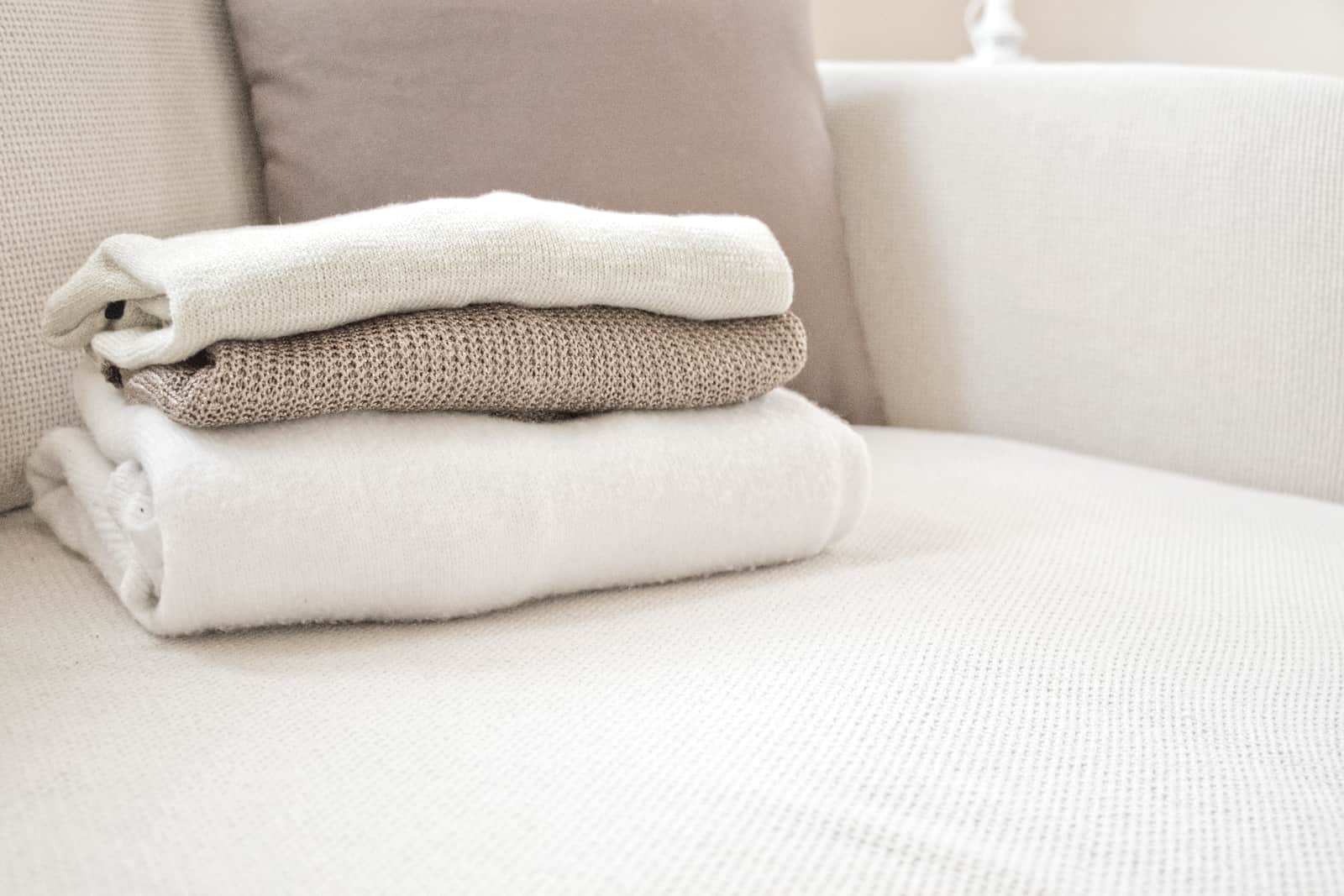
One heats a room, the other heats a person, and the power difference between them is about fifteen to one.
By Scooter M. · Published August 31, 2026 · Last reviewed August 31, 2026
How this page is funded: we earn a commission if you buy through the links here, at no extra cost to you. Picks are chosen before links are attached, which is why every roundup names something to skip. Full disclosure.
A heated blanket typically draws in the region of 50–200 W against a space heater's 1,500 W. For one person sitting still, the blanket costs roughly a tenth to a fifteenth as much per hour. It does nothing for the room, which is exactly the trade.
The arithmetic
Heated blankets and throws are commonly rated somewhere between 50 W and 200 W depending on size and setting — check the label on yours rather than trusting a general figure, since the range is wide. Take 100 W as a representative mid-point for a full-size electric blanket.
Appliance
Watts
Cost per hour
Cost for 4 hours
Heated throw (low)
50 W
0.9¢
3.7¢
Heated blanket (typical)
100 W
1.8¢
7.3¢
Heated blanket (large, high)
200 W
3.7¢
14.7¢
Space heater (low setting)
750 W
13.8¢
55.0¢
Space heater (full output)
1,500 W
27.5¢
$1.10
Computed at 18.34¢/kWh (EIA, June 2026). Blanket wattages are typical ranges — check your own label.
An evening on the sofa is the clearest case. Four hours of a heated throw is about four cents. Four hours of a 1,500 W heater is about a dollar ten. Over a 90-day heating season that is roughly $3.30 against $99 — and for a single stationary person, the comfort outcome is genuinely comparable.
Why the difference is so large
It is not efficiency; both are essentially 100%. It is the size of the thing being heated. A space heater raises the temperature of every cubic foot of air in the room, and the room keeps losing that heat to the outdoors. A blanket puts a small amount of heat directly against a person, inside an insulating layer, and almost none of it escapes anywhere useless.
That is the same principle behind radiant heating — heat the person, not the volume — taken to its logical end. A blanket is the most efficient personal heating device in the house precisely because it has the smallest possible thing to heat.
Where the blanket loses
It heats one person, and only while they are under it. Get up and you are cold again; a second person needs a second blanket. An under-desk radiant panel costs a little more per hour and does not have to be draped over you.
It does nothing about the room. If the room is at 55°F, your hands, face and the air you breathe are still at 55°F. Below a certain temperature, that is not a comfort solution.
Pipes and possessions. A room held above freezing for plumbing reasons needs actual room heat, and a blanket contributes nothing to that.
Safety context differs. Electric bedding carries its own guidance — never fold or bunch it while running, and replace ageing units rather than repairing them.
Picks for the room half of that combination
Quick picks
Ranked for fit, not for hype. Coverage and current draw are computed from each unit’s published wattage. Tap a row for the full write-up, or go straight to the listing.
#
Product
Best for
Covers
Draw
Price
1
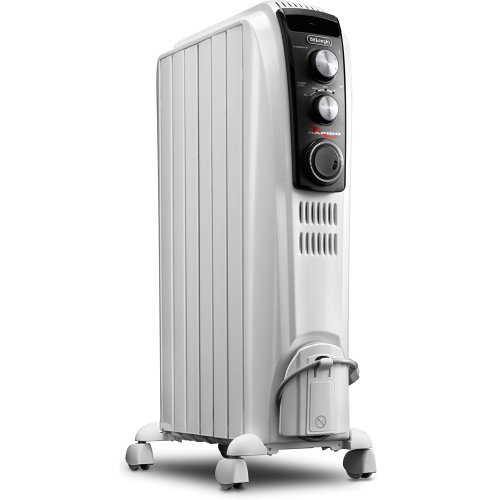
De'Longhi TRD40615TNo fan, so no noise and no moving dust — and the sealed oil keeps radiating after the element cuts out, which is why an oil-filled unit feels steadier than a ceramic one at the same wattage.
Lasko 754201The 900 W low setting is the whole point: it is the rare listing that publishes both settings, so you can compute what the cheap mode actually costs instead of guessing.
No fan, so no noise and no moving dust — and the sealed oil keeps radiating after the element cuts out, which is why an oil-filled unit feels steadier than a ceramic one at the same wattage.
Rated power
1,500 W
Covers (computed)
150 sq ft
Draw (computed)
12.5 A at 120 V
Cost per hour
27.5¢
Coverage at 10 W/sq ft, average insulation, 8 ft ceiling = 5,118 BTU/h. Cost at 18.34¢/kWh; an eight-hour night at full output is $2.20. Exceeds the 12 A continuous limit of a 15 A circuit — check what else shares the breaker.
What works
Genuinely silent: there is no fan to hear at 3 a.m.
The oil holds heat, so the room temperature swings less between thermostat cycles
Nothing blows air, so nothing stirs up dust in a bedroom
What does not
Slow. It takes 20–30 minutes to feel like it is doing anything
Heavy — the wheels are not a courtesy, they are a requirement
The surface gets genuinely hot; this is a radiator, not a cool-touch case
Published specification
Rated power
1,500 W at 120 V
Controls
Mechanical, with a programmable 24-hour timer
Fluid
Permanently sealed diathermic oil — never needs refilling
Maker's claim
Up to 75% more radiant surface area
Mobility
Front and rear handles, snap-on wheels
Heat type
Oil-filled
Maker’s coverage claim
None published — the coverage figure above is ours
Safety listing
No listing mark published in the listing text; verify the UL or ETL mark on the rating plate.
Who it is for
A bedroom, a nursery at a safe distance, or anywhere the fan noise of a ceramic heater is the actual problem you are trying to solve.
What it is not for
Fast heat, and not a room you only occupy for twenty minutes. It also should never be tucked beside a bed or curtain — hot surface, 3-foot rule.
The 900 W low setting is the whole point: it is the rare listing that publishes both settings, so you can compute what the cheap mode actually costs instead of guessing.
Rated power
1,500 W / 900 W low
Covers (computed)
150 sq ft
Draw (computed)
12.5 A at 120 V
Cost per hour
27.5¢
Coverage at 10 W/sq ft, average insulation, 8 ft ceiling = 5,118 BTU/h. Cost at 18.34¢/kWh; an eight-hour night at full output is $2.20. Exceeds the 12 A continuous limit of a 15 A circuit — check what else shares the breaker.
What works
Both wattages are published, which is what makes an honest cost comparison possible
9 inches tall: it fits under a desk without being in the way
Manual top-mounted controls — nothing to relearn, nothing to lose the remote for
What does not
A dial thermostat with no numbers on it: you cannot set 68°F, only “about there”
No child lock, so the dial is reachable by anyone who can reach the unit
Fan noise is the price of a small ceramic unit moving 1,500 W of heat
ETL listed, per Lasko's published specification — one of the few in this roundup that names a mark rather than leaving it to the rating plate.
Who it is for
A desk, a small office, a dorm room — somewhere you want heat on a person rather than in a room.
What it is not for
A nursery, and not unattended use. It publishes a tip-over switch and overheat protection, but no child lock — and the USFA's advice to switch a heater off when you leave the room applies to every unit on this site, listed or not.
Much cheaper. A typical heated blanket draws around 100 W against a space heater's 1,500 W, so it costs roughly a fifteenth as much per hour — about 1.8 cents against 27.5 cents at the U.S. average rate.
How many watts does an electric blanket use?+
Commonly between 50 and 200 W depending on size and setting. Check the label on your own, since the range is wide and the wattage is the entire cost story.
Can a heated blanket replace a space heater?+
For one stationary person in a room that is merely cool, often yes. It cannot make a cold room habitable, it does not help anyone not under it, and it does nothing for pipes or possessions.
What is the cheapest way to stay warm at home?+
Heat the person rather than the space where you can: a heated blanket or throw for stationary time, a lower room setpoint, and a space heater only in the room you are actually using.
A desk does not need a room heater. 170 W of radiant panel against 1,500 W — the arithmetic and the picks.
Written by Scooter M., an enthusiast — not a tester and not a certified anything. Every figure on this page is either published by the manufacturer, taken from a live retail listing, or computed from the published wattage using the formulas we publish. Found an error? Tell us and we will correct it, visibly and with a date on it.