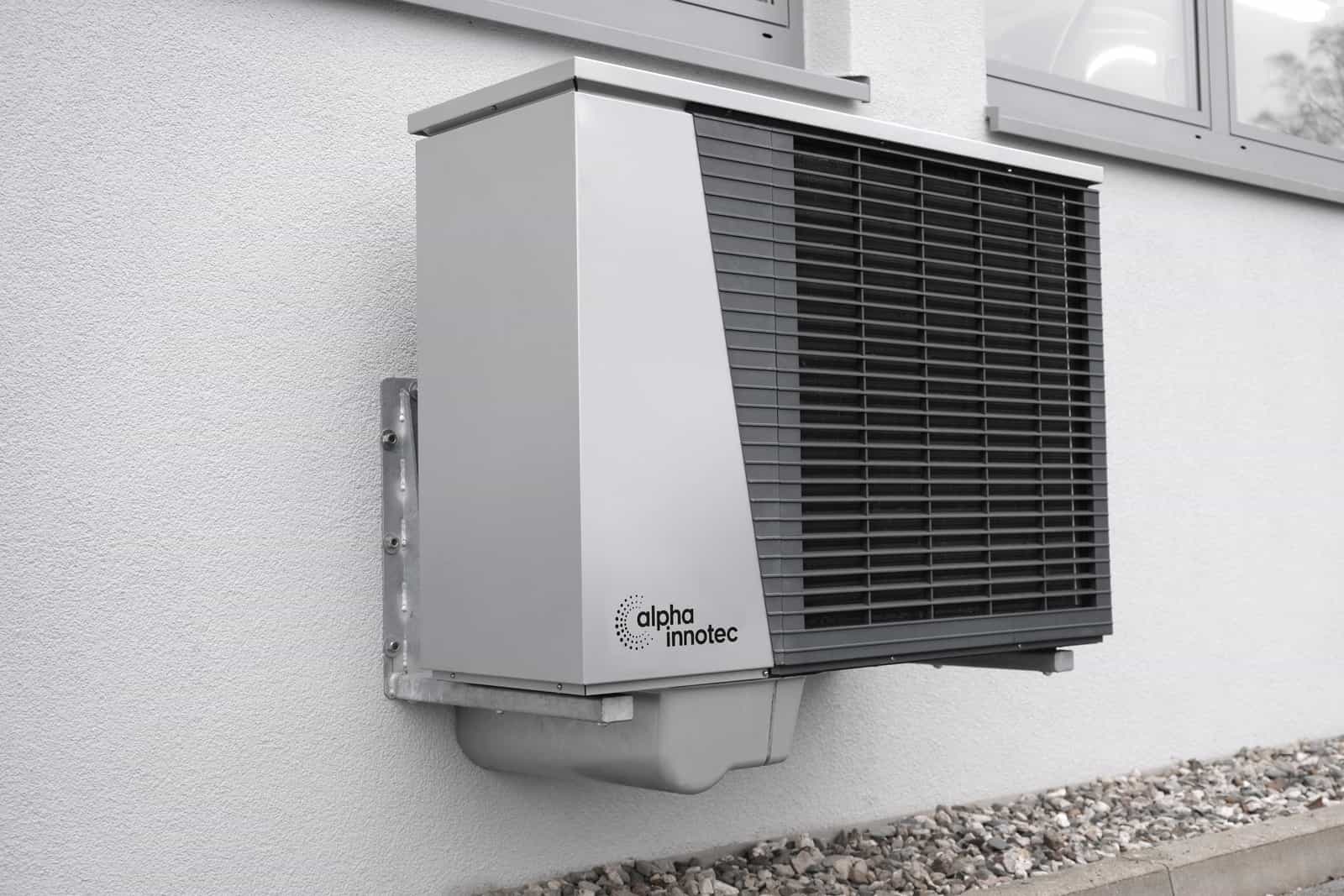
This is the one comparison on this site where the space heater loses on physics rather than on price — and it is not close.
By Scooter M. · Published August 31, 2026 · Last reviewed August 31, 2026
How this page is funded: we earn a commission if you buy through the links here, at no extra cost to you. Picks are chosen before links are attached, which is why every roundup names something to skip. Full disclosure.
A heat pump moves existing heat rather than making it, so it delivers roughly two to four units of heat per unit of electricity — a coefficient of performance of 2 to 4. A space heater delivers exactly one. Per unit of heat, the heat pump costs a half to a quarter as much to run.
The number that decides it: COP
Everything else on this site treats electric heating as a 1:1 conversion, and for a resistive heater that is exact. A heat pump breaks the rule because it is not a heater in the same sense — it is a refrigerator run backwards, using electricity to move heat that already exists in the outdoor air into your house.
The measure of that is coefficient of performance: heat delivered divided by electricity consumed. A resistance heater has a COP of 1.0 by definition. A modern air-source heat pump typically runs between about 2 and 4 depending on the outdoor temperature — highest in mild conditions, falling as it gets colder.
System
COP
Electricity for 5,118 BTU
Cost at 18.34¢/kWh
Space heater (resistance)
1.0
1.500 kWh
27.5¢
Heat pump, cold conditions
2.0
0.750 kWh
13.8¢
Heat pump, moderate conditions
3.0
0.500 kWh
9.2¢
Heat pump, mild conditions
4.0
0.375 kWh
6.9¢
5,118 BTU/h is the output of one 1,500 W heater. Electricity at 18.34¢/kWh (EIA, June 2026). COP ranges are typical for modern air-source units and vary by model and outdoor temperature.
Read the last column. The same amount of heat costs 27.5 cents from a space heater and somewhere between 7 and 14 cents from a heat pump. Over a heating season that is not a rounding difference.
The caveat, stated properly rather than buried
COP falls as the outdoor temperature falls, because there is less ambient heat available to move. In genuinely cold conditions a heat pump's advantage narrows, and many units include electric resistance elements as backup — at which point they are running at COP 1.0 and cost exactly what a space heater costs.
Cold-climate heat pumps have improved substantially and maintain useful output far below freezing, but the direction of the effect is not in dispute: the colder it is, the smaller the win. If you are comparing systems, get the manufacturer's published performance at your design temperature rather than the headline COP, which is measured in mild conditions.
What this means if you already have a heat pump
Do not run a space heater instead of it. This is the one configuration where using a space heater is straightforwardly the more expensive option, even for a single room: the heat pump is already delivering two to four times the heat for the same electricity, and switching to a resistance heater to “save the heat pump running” costs you money.
The exception is a genuinely under-served room — an addition on a long duct run, a room the system was never sized for — where the heat pump cannot deliver the heat regardless of its efficiency. There, a space heater is closing a capacity gap rather than substituting for an efficiency one, and it is the correct tool.
If you are choosing for one room
Top pick · A whole living room
Dreo Solaris 718 Oscillating Tower Heater (30 in)
The rare heater whose published coverage claim survives the arithmetic: 1,500 W is a genuine 300 sq ft at 10 W/sq ft, and Dreo publishes that number rather than implying more.
Rated power
1,500 W
Covers (computed)
150 sq ft
Draw (computed)
12.5 A at 120 V
Cost per hour
27.5¢
Coverage at 10 W/sq ft, average insulation, 8 ft ceiling = 5,118 BTU/h. Cost at 18.34¢/kWh; an eight-hour night at full output is $2.20. Exceeds the 12 A continuous limit of a 15 A circuit — check what else shares the breaker.
What works
A digital thermostat with numbers on it — you can set 68°F rather than guess at a dial
The published 300 sq ft claim matches the standard sizing rule instead of exceeding it
8 lb and 8 inches square: it moves room to room without a project
What does not
1,500 W is 1,500 W — nothing here heats faster than any other 1,500 W heater
Dreo does not publish a noise figure in decibels on the product page
Tall and narrow, which is a tipping profile: the tip-over cutoff matters more here
A living room, bedroom or den at or under 300 sq ft with average insulation and an 8-foot ceiling, where you want to set a temperature and stop thinking about it.
What it is not for
A garage, an uninsulated basement, or anything over about 300 sq ft. It is not under-powered — 1,500 W is the plug-in ceiling — the room is simply too big for one outlet.
Is a heat pump cheaper to run than a space heater?+
Yes, substantially. A heat pump delivers two to four units of heat per unit of electricity; a space heater delivers one. The same heat that costs 27.5 cents from a space heater costs roughly 7 to 14 cents from a heat pump.
Should I use a space heater instead of my heat pump?+
No. The heat pump is already producing more heat per kilowatt-hour, so substituting a resistance heater costs more. The exception is a room the heat pump genuinely cannot reach, where a space heater is closing a capacity gap.
What is COP for a heat pump?+
Coefficient of performance — heat delivered divided by electricity consumed. Resistance heating is 1.0 by definition. Modern air-source heat pumps typically run 2 to 4, falling as the outdoor temperature drops.
Do heat pumps stop working in cold weather?+
They lose efficiency as the outdoor temperature falls, and many units switch to electric resistance backup in extreme cold — where they cost the same as a space heater. Cold-climate models maintain useful output well below freezing.
10,000 W of demand, 1,500 W of supply. Why “heats 1,000 sq ft” listings are not describing heat.
Written by Scooter M., an enthusiast — not a tester and not a certified anything. Every figure on this page is either published by the manufacturer, taken from a live retail listing, or computed from the published wattage using the formulas we publish. Found an error? Tell us and we will correct it, visibly and with a date on it.