No fan, so no noise and no moving dust. It is the bedroom answer, and it is a genuinely bad choice for three other rooms.
By Scooter M. · Published August 31, 2026 · Last reviewed August 31, 2026
How this page is funded: we earn a commission if you buy through the links here, at no extra cost to you. Picks are chosen before links are attached, which is why every roundup names something to skip. Full disclosure.
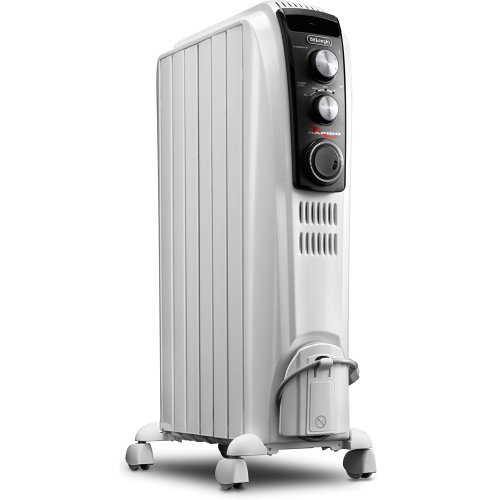
The De'Longhi TRD40615T is a 1,500 W oil-filled radiator with mechanical controls and a programmable 24-hour timer. It has no fan, so it is silent and moves no dust, and its sealed diathermic oil keeps radiating after the element cuts out.
Why an oil-filled radiator behaves differently
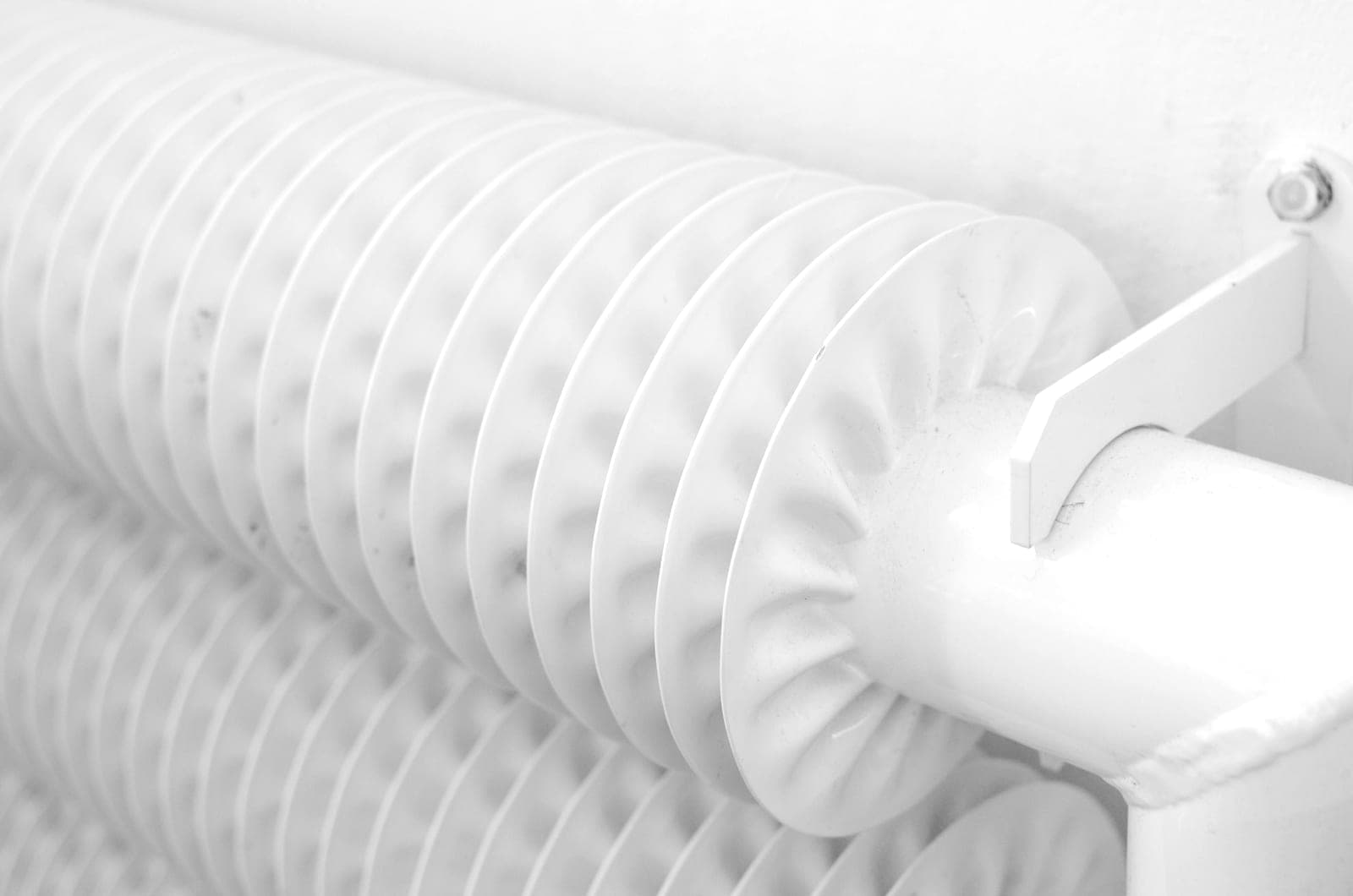
The element sits inside a permanently sealed steel body filled with diathermic oil. The oil is a heat-transfer medium, never a fuel — it is not consumed and cannot be topped up. The element heats the oil, the oil circulates through the fins by convection, and the fins warm the room by radiation and natural convection.
Two consequences follow, and they are the whole character of the unit. No fan means silence and no airborne dust. Substantial thermal mass means slow to warm and slow to cool — twenty to thirty minutes before you feel anything, and continued output for many minutes after the thermostat cuts. The full type comparison.
The specification and the computed numbers
Top pick · Silence, and a bedroom
De'Longhi TRD40615T Oil-Filled Radiator Heater
No fan, so no noise and no moving dust — and the sealed oil keeps radiating after the element cuts out, which is why an oil-filled unit feels steadier than a ceramic one at the same wattage.
Rated power
1,500 W
Covers (computed)
150 sq ft
Draw (computed)
12.5 A at 120 V
Cost per hour
27.5¢
Coverage at 10 W/sq ft, average insulation, 8 ft ceiling = 5,118 BTU/h. Cost at 18.34¢/kWh; an eight-hour night at full output is $2.20. Exceeds the 12 A continuous limit of a 15 A circuit — check what else shares the breaker.
What works
Genuinely silent: there is no fan to hear at 3 a.m.
The oil holds heat, so the room temperature swings less between thermostat cycles
Nothing blows air, so nothing stirs up dust in a bedroom
What does not
Slow. It takes 20–30 minutes to feel like it is doing anything
Heavy — the wheels are not a courtesy, they are a requirement
The surface gets genuinely hot; this is a radiator, not a cool-touch case
Published specification
Rated power
1,500 W at 120 V
Controls
Mechanical, with a programmable 24-hour timer
Fluid
Permanently sealed diathermic oil — never needs refilling
Maker's claim
Up to 75% more radiant surface area
Mobility
Front and rear handles, snap-on wheels
Heat type
Oil-filled
Maker’s coverage claim
None published — the coverage figure above is ours
Safety listing
No listing mark published in the listing text; verify the UL or ETL mark on the rating plate.
Who it is for
A bedroom, a nursery at a safe distance, or anywhere the fan noise of a ceramic heater is the actual problem you are trying to solve.
What it is not for
Fast heat, and not a room you only occupy for twenty minutes. It also should never be tucked beside a bed or curtain — hot surface, 3-foot rule.
Computed at 18.34¢/kWh — the U.S. residential average for June 2026 (EIA, Electric Power Monthly, Table 5.6.A, released August 26, 2026). Your rate is on your own bill; substitute it and the arithmetic still holds. Figures assume full output for the whole period.
Those figures are full output. In practice an oil-filled radiator's real consumption is somewhat lower than an equivalent fan heater's over a long evening, because the coasting oil means the thermostat calls less often. That is a genuine effect and it is a control benefit, not an efficiency one — the heat released while coasting was paid for at the same 27.5 cents an hour as everything else.
The 24-hour timer is the safety feature
A programmable timer is not sold as a safety feature and it is the most useful one on this unit. The U.S. Fire Administration's guidance is to turn heaters off when you go to bed, and unattended running is a named contributing factor in its portable heater data. A timer lets you warm the bedroom while you fall asleep and have the heater stop by itself — the full discussion. De'Longhi's digital version of this radiator publishes the same 24-hour timer and adds a child lock, which is the only real difference between them — the Dragon Digital, reviewed.
Who should not buy this
Anyone who needs heat in five minutes. A bathroom, a hallway, a room you use briefly — the twenty-to-thirty-minute warm-up disqualifies it entirely, and a ceramic fan heater is the right tool.
Anyone with a toddler or a crawling child in the room. The fins get genuinely hot to the touch, by design. This is not a cool-touch appliance and it is not sold as one. Why it is the skip entry in our nursery roundup.
Anyone who wants to move it between rooms. The wheels are not a convenience, they are a requirement, and it is not going upstairs twice.
Anyone with a genuinely large room. It is still 1,500 W. The sizing rule applies to it exactly as it applies to everything else.
Questions people actually ask
Is the De'Longhi TRD40615T quiet?+
Yes — it has no fan, so it is effectively silent. Oil-filled radiators can tick occasionally as the steel expands and contracts when the thermostat cycles, but there is no continuous noise.
How long does the De'Longhi TRD40615T take to heat a room?+
Typically 20 to 30 minutes before you feel a difference, because it must warm several kilograms of steel and oil first. That is characteristic of every oil-filled radiator, not a fault of this one.
Does the oil in a De'Longhi radiator need refilling?+
No. The diathermic oil is permanently sealed and is a heat-transfer medium rather than a fuel. It is never consumed and cannot be topped up.
How much does the De'Longhi TRD40615T cost to run?+
About 27.5 cents an hour at 1,500 W and the U.S. average rate of 18.34¢/kWh — the same as any other 1,500 W heater. Real consumption is often a little lower because the oil's thermal mass reduces how often the thermostat calls.
Same heat as the mechanical TRD40615T for a modest premium. What the money buys is a child lock and a digital panel.
Written by Scooter M., an enthusiast — not a tester and not a certified anything. Every figure on this page is either published by the manufacturer, taken from a live retail listing, or computed from the published wattage using the formulas we publish. Found an error? Tell us and we will correct it, visibly and with a date on it.