A 200 sq ft room needs about 2,000 W at average insulation and an 8-foot ceiling. A plug-in heater delivers 1,500 W, so a single unit is roughly 25% short: it will warm the room usefully but will run continuously rather than cycling.
200 sq ft × 10 W = 2,000 W. One heater is 1,500 W. The shortfall is 500 W, or 25%.
| Room size | Watts needed | BTU/h | Plug-in heaters |
|---|
| 200 sq ft | 2,000 W | 6,824 | 2 (different circuits) |
Computed as square feet x 10 W x insulation factor x (ceiling / 8 ft), for an average heated room — 10 W/sq ft, 8 ft ceiling. Heater count assumes the 1,500 W plug-in ceiling.
It is worth being precise about what a 25% shortfall feels like, because it is not failure. The heater will raise the room's temperature; it just will not reach an arbitrary setpoint on the coldest days, and it will run flat out doing it. In a 200 sq ft bedroom in a heated house, that is usually perfectly acceptable — the room only has to make up a few degrees over whatever the house is already holding.
In a 200 sq ft room that is genuinely cold to start with — an addition, a room over a garage, a converted porch — 25% short is the difference between comfortable and not.
- 1.Turn the main system down and let the heater work with it. The heater only has to cover the difference between the house temperature and the room temperature you want, not the whole load. This is the cheapest fix and it is free.
- 2.Reduce the demand. A single-glazed window, an uninsulated exterior door or an unsealed gap under a door is often worth more than 500 W. Sealing it is a one-time cost against a heater's permanent hourly one.
- 3.Add a second heater on a second circuit. Two 1,500 W units draw 25 A combined, so they must be on different breakers — not just different outlets. How to check.
- 4.Accept a lower setpoint. 66°F in a room you are moving around in is genuinely comfortable, and it is meaningfully cheaper than 70°F. This is an unglamorous answer that solves more of these cases than any product.
| Wattage | Per hour | 4 h | 8 h | 12 h |
|---|
| 1,500 W | 27.5¢ | $1.10 | $2.20 | $3.30 |
| 2,000 W | 36.7¢ | $1.47 | $2.93 | $4.40 |
Computed at 18.34¢/kWh — the U.S. residential average for June 2026 (EIA, Electric Power Monthly, Table 5.6.A, released August 26, 2026). Your rate is on your own bill; substitute it and the arithmetic still holds. Figures assume full output for the whole period.
The 2,000 W column is the theoretical cost of actually meeting this room's demand — which is what two heaters, or one heater plus the house system doing part of the work, would cost. The 1,500 W column is what one heater actually spends. Notice that one heater running continuously is not cheap; being under-sized does not make a heater economical, it just makes it slower.
Quick picks
Ranked for fit, not for hype. Coverage and current draw are computed from each unit’s published wattage. Tap a row for the full write-up, or go straight to the listing.
| # | Product | Best for | Covers | Draw | Price |
|---|
| 1 | Dreo Solaris 718The rare heater whose published coverage claim survives the arithmetic: 1,500 W is a genuine 300 sq ft at 10 W/sq ft, and Dreo publishes that number rather than implying more. | A whole living room | 150 sq ft | 12.5 A | $129.99 · Check on Amazon |
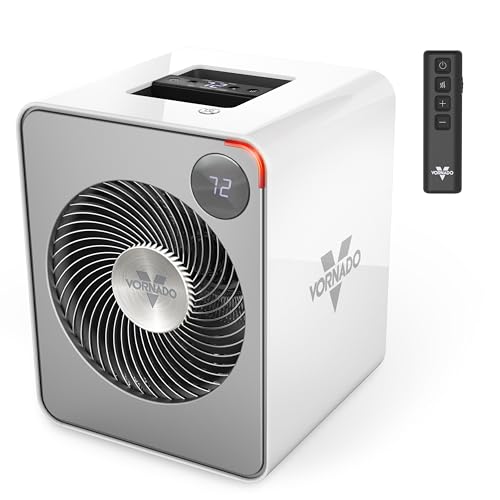
| 2 | Vornado VMHi500The current top of Vornado's metal line: auto-climate control, two LED displays and a 1-12 hour timer in a cool-touch metal box, backed by five years. | A metal cabinet that stops on its own | 150 sq ft | 12.5 A | $135.99 · Check on Amazon |
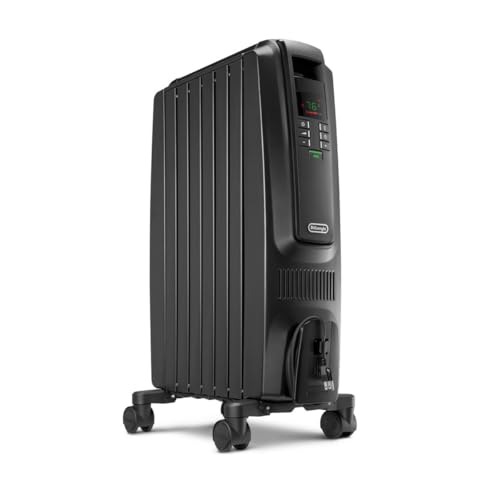
| 3 | De'Longhi Dragon DigitalThe oil-filled radiator with a programmable timer, which is the version that matters overnight: it can bring a bedroom up before you wake and shut itself off, unattended, without you leaving it running all night. | Overnight, on a schedule | 150 sq ft | 12.5 A | $189.95 · Check on Amazon |
Coverage computed at 10 W/sq ft, average insulation, 8 ft ceiling. Draw computed as watts ÷ volts. Neither figure is a manufacturer claim.
#ad · how this site is funded · price as of October 18, 2026
Top pick · A whole living room
Dreo Solaris 718 Oscillating Tower Heater (30 in)
The rare heater whose published coverage claim survives the arithmetic: 1,500 W is a genuine 300 sq ft at 10 W/sq ft, and Dreo publishes that number rather than implying more.
- Rated power
- 1,500 W
- Covers (computed)
- 150 sq ft
- Draw (computed)
- 12.5 A at 120 V
- Cost per hour
- 27.5¢
Coverage at 10 W/sq ft, average insulation, 8 ft ceiling = 5,118 BTU/h. Cost at 18.34¢/kWh; an eight-hour night at full output is $2.20. Exceeds the 12 A continuous limit of a 15 A circuit — check what else shares the breaker.
What works
- A digital thermostat with numbers on it — you can set 68°F rather than guess at a dial
- The published 300 sq ft claim matches the standard sizing rule instead of exceeding it
- 8 lb and 8 inches square: it moves room to room without a project
What does not
- 1,500 W is 1,500 W — nothing here heats faster than any other 1,500 W heater
- Dreo does not publish a noise figure in decibels on the product page
- Tall and narrow, which is a tipping profile: the tip-over cutoff matters more here
| Published specification |
|---|
| Rated power | 1,500 W at 120 V |
| Maker's coverage claim | 300 sq ft |
| Thermostat | 41–95°F digital, 1°F increments |
| Oscillation | 30° / 60° / 90° / 120° |
| Dimensions | 7.9" D x 7.9" W x 29.7" H, 8 lb |
| Safety | Tip-over cutoff, overheat cutoff, child lock, thermal cutoff |
| Heat type | Ceramic (PTC) |
| Maker’s coverage claim | 300 sq ft |
| Safety listing | ETL listed (stated by Dreo on the product page) |
Who it is for
A living room, bedroom or den at or under 300 sq ft with average insulation and an 8-foot ceiling, where you want to set a temperature and stop thinking about it.
What it is not for
A garage, an uninsulated basement, or anything over about 300 sq ft. It is not under-powered — 1,500 W is the plug-in ceiling — the room is simply too big for one outlet.
2 · A metal cabinet that stops on its own
Vornado VMHi500 Whole Room Metal Heater
The current top of Vornado's metal line: auto-climate control, two LED displays and a 1-12 hour timer in a cool-touch metal box, backed by five years.
- Rated power
- 1,500 W
- Covers (computed)
- 150 sq ft
- Draw (computed)
- 12.5 A at 120 V
- Cost per hour
- 27.5¢
Coverage at 10 W/sq ft, average insulation, 8 ft ceiling = 5,118 BTU/h. Cost at 18.34¢/kWh; an eight-hour night at full output is $2.20. Exceeds the 12 A continuous limit of a 15 A circuit — check what else shares the breaker.
What works
- Auto-Climate Control adjusts output to hold a temperature rather than running flat out — the cycling behavior that genuinely lowers consumption
- A 1–12 hour timer means it can stop on its own, which is the only reliable way an overnight heater saves money
- Five years on a heater at this price is a costed commitment, not a marketing line
What does not
- Vornado publishes no wattage and no coverage figure, so every sizing and cost number here is ours, computed from the retail-listed 1,500 W
- No child lock is published — the same gap the rest of Vornado's range has, and it is disqualifying for a nursery
- It is a fan heater in a metal box: moving air is the mechanism and you will hear it
| Published specification |
|---|
| Rated power | 1,500 W at 120 V (retail listings; Vornado publishes settings, not watts) |
| Heat settings | 2, plus fan-only |
| Thermostat | Auto-Climate Control, digital |
| Timer | 1–12 hours |
| Display | Two LED displays, for reading it from across the room |
| Housing | Cool-touch, powder-coated gloss metal cabinet with cord storage |
| Safety | Tip-over protection and a 2-stage auto shutoff |
| Warranty | 5-year satisfaction guarantee |
| Heat type | Fan-forced |
| Maker’s coverage claim | None published — the coverage figure above is ours |
| Safety listing | Vornado publishes tip-over protection and a 2-stage auto shutoff but does not name a listing mark; check the rating plate. |
Who it is for
A living room or bedroom where the heater is permanent and visible, and where a real thermostat, a timer and a cool metal shell are worth paying for over a plastic tower.
What it is not for
A nursery, because no child lock is published; and not silence, which means an oil-filled radiator instead.
Sources for this entry
- Amazon listing — published model VMHi500 (2026), digital thermostat, remote control, auto-climate control, 12-hour timer
- Vornado — VMHi500 product page (2 heat settings plus fan-only, Auto-Climate Control, 1-12 hour timer, two LED displays, cool-touch powder-coated metal cabinet, tip-over protection, 2-stage auto shutoff, 5-year guarantee)
3 · Overnight, on a schedule
De'Longhi Dragon Digital Oil-Filled Radiator (TRD40615EBK)
The oil-filled radiator with a programmable timer, which is the version that matters overnight: it can bring a bedroom up before you wake and shut itself off, unattended, without you leaving it running all night.
- Rated power
- 1,500 W
- Covers (computed)
- 150 sq ft
- Draw (computed)
- 12.5 A at 120 V
- Cost per hour
- 27.5¢
Coverage at 10 W/sq ft, average insulation, 8 ft ceiling = 5,118 BTU/h. Cost at 18.34¢/kWh; an eight-hour night at full output is $2.20. Exceeds the 12 A continuous limit of a 15 A circuit — check what else shares the breaker.
What works
- A programmable timer is the honest answer to “can I leave it on overnight” — you don't have to
- Silent, like every oil-filled unit: no fan, no moving air
- Digital control means you set a temperature, not a knob position
What does not
- Costs more than the mechanical TRD40615T for identical heat output
- Same slow warm-up as any oil-filled radiator
- Heavy and bulky for its coverage — 26 inches of steel you will not be carrying upstairs
| Published specification |
|---|
| Rated power | 1,500 W at 120 V |
| Controls | Digital, with a 24-hour programmable timer |
| ECO function | Regulates power and temperature rather than running at full output |
| Dimensions | 16" x 10" x 26" |
| Fluid | Permanently sealed diathermic oil |
| Safety | Child lock, thermal cut-off |
| Maker's coverage claim | None published — sold as a full-room heater |
| Heat type | Oil-filled |
| Maker’s coverage claim | None published — the coverage figure above is ours |
| Safety listing | No listing mark published in the listing text; verify the UL or ETL mark on the rating plate. |
Who it is for
A bedroom where the heater needs to run on a schedule rather than all night, and where noise would wake you.
What it is not for
A room you need warm in five minutes, or a tight space where a hot 26-inch radiator cannot keep 3 feet of clearance.
The obvious response to a 500 W shortfall is to buy a 2,000 W heater, and the reason you cannot is not the manufacturers. A 120 V, 15 A branch circuit supports 12 A of continuous load, which is 1,440 W; 1,500 W is already slightly over that and is the accepted industry ceiling. A 2,000 W plug-in heater would draw 16.7 A and could not be sold for a standard outlet. The full explanation.