Almost every plug-in heater sold in America is 1,500 W. Here is why, and what is actually left to choose between once the wattage is identical.
By Scooter M. · Published October 3, 2026 · Last reviewed October 3, 2026
How this page is funded: we earn a commission if you buy through the links here, at no extra cost to you. Picks are chosen before links are attached, which is why every roundup names something to skip. Full disclosure.
Almost every plug-in heater in the US is 1,500 W because a 120 V, 15 A circuit allows no more as a continuous load. Every 1,500 W heater therefore produces about 5,118 BTU/h and costs about 27.5 cents an hour. The choice is entirely control, safety disclosure, noise and shape.
Why 1,500 W is the number, on nearly everything
It is not a design convention or a marketing tier. It is the arithmetic of a US branch circuit. A 15 A circuit carrying a load for three hours or more is treated as continuous and may not exceed 80% of the breaker rating — 12 A, which at 120 V is 1,440 W. Manufacturers build to 1,500 W, a whisker over, and the result is that the entire plug-in category is clustered at one output. The full continuous-load arithmetic.
Heater
Draw at 120 V
15 A circuit (12 A limit)
20 A circuit (16 A limit)
750 W
6.3 A
Fits
Fits
900 W
7.5 A
Fits
Fits
1,200 W
10.0 A
Fits
Fits
1,500 W
12.5 A
Over the limit
Fits
Maximum continuous
—
12 A = 1,440 W
16 A = 1,920 W
Draw computed as watts / 120 V. The continuous limit is 80% of the breaker rating, which follows from the NEC's requirement to size a circuit at 125% of a continuous load (NFPA 70, 210.19(A)(1) and 210.20(A)).
So "best 1,500 watt space heater" is a slightly different question from the one it looks like. You are not choosing an output — you have already chosen it, and so has everyone else. You are choosing among machines with identical heat and identical running cost.
What is left to choose on
Control precision, first and by a distance. Hours are the only variable in your bill once wattage is fixed, and the instrument that removes hours is the thermostat. A heater you can set to 64°F cycles off and stays off; a dial marked low-to-high gets set too high, overshoots, and gets switched off manually an hour later than it should. Only 7 of the 29 purchasable heaters we track publish a thermostat range in degrees at all.
A published low setting, which is the second operating point. A 1,500 W heater with a published 900 W step costs 16.5 cents an hour in that step instead of 27.5, and draws 7.5 A instead of 12.5 — which also means it fits a shared circuit. The catch is that most listings say "three heat settings" and publish no wattages, leaving you one costable number out of three.
Then shape and noise, which decide whether you keep using it. Fanless radiators are silent and slow; ceramic fan heaters are fast and audible; towers oscillate and tip; tabletop units sit where cords get stepped on. None of this changes the heat. All of it changes whether the heater ends up in a closet by February.
What 1,500 W does and does not cover
At 10 W per square foot, 1,500 W is about 150 sq ft with average insulation and an 8-foot ceiling. Multiply by 1.25 for a drafty room and 1.5 for one outside the heated envelope, and that figure falls fast.
Room size
Watts needed
BTU/h
Plug-in heaters
100 sq ft
1,000 W
3,412
1
150 sq ft
1,500 W
5,118
1
200 sq ft
2,000 W
6,824
2 (different circuits)
300 sq ft
3,000 W
10,236
2 (different circuits)
Computed as square feet x 10 W x insulation factor x (ceiling / 8 ft), for an average heated room — 10 W/sq ft, 8 ft ceiling. Heater count assumes the 1,500 W plug-in ceiling.
This is the honest ceiling on the whole category and it is why so many 1,500 W heaters disappoint: a 300 sq ft living room needs about 3,000 W and a wall outlet will not give it to you. If the room is bigger than about 150 sq ft, the heater is a supplement to your central heat rather than a replacement for it, and no amount of shopping within the 1,500 W class changes that.
The picks
Quick picks
Ranked for fit, not for hype. Coverage and current draw are computed from each unit’s published wattage. Tap a row for the full write-up, or go straight to the listing.
#
Product
Best for
Covers
Draw
Price
1
Dreo Solaris 718The rare heater whose published coverage claim survives the arithmetic: 1,500 W is a genuine 300 sq ft at 10 W/sq ft, and Dreo publishes that number rather than implying more.
Lasko 755320A 23-inch digital tower with a thermostat, an 8-hour timer and a remote — and the only heater here whose published coverage figure lands exactly where our own sizing rule puts it.
The maker's coverage claim that matches the arithmetic
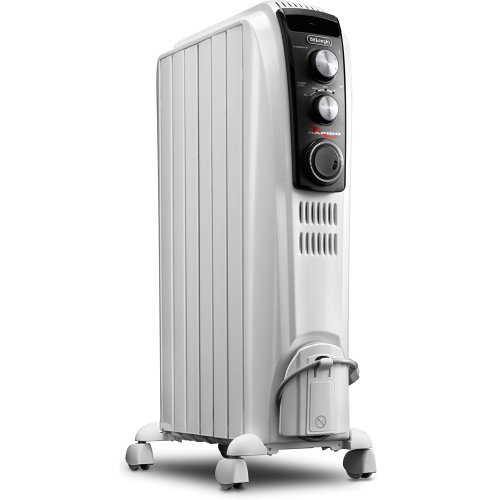
De'Longhi TRD40615TNo fan, so no noise and no moving dust — and the sealed oil keeps radiating after the element cuts out, which is why an oil-filled unit feels steadier than a ceramic one at the same wattage.
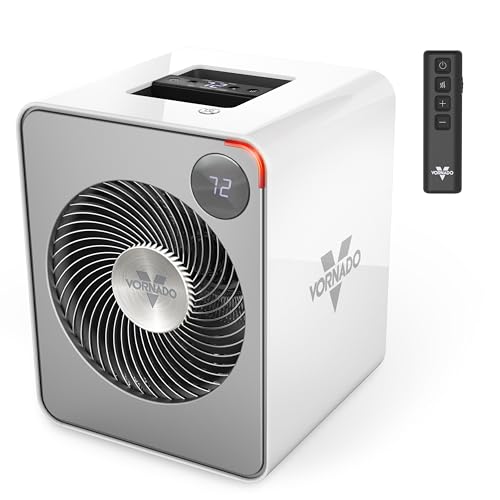
Vornado VMHi500The current top of Vornado's metal line: auto-climate control, two LED displays and a 1-12 hour timer in a cool-touch metal box, backed by five years.
Honeywell HCE220BA shoebox-sized ceramic heater that publishes four preset temperatures and a 2/4/8-hour auto-off — specificity almost nothing else this size offers.
A thermostat with numbers on it, on a small heater
The rare heater whose published coverage claim survives the arithmetic: 1,500 W is a genuine 300 sq ft at 10 W/sq ft, and Dreo publishes that number rather than implying more.
Rated power
1,500 W
Covers (computed)
150 sq ft
Draw (computed)
12.5 A at 120 V
Cost per hour
27.5¢
Coverage at 10 W/sq ft, average insulation, 8 ft ceiling = 5,118 BTU/h. Cost at 18.34¢/kWh; an eight-hour night at full output is $2.20. Exceeds the 12 A continuous limit of a 15 A circuit — check what else shares the breaker.
What works
A digital thermostat with numbers on it — you can set 68°F rather than guess at a dial
The published 300 sq ft claim matches the standard sizing rule instead of exceeding it
8 lb and 8 inches square: it moves room to room without a project
What does not
1,500 W is 1,500 W — nothing here heats faster than any other 1,500 W heater
Dreo does not publish a noise figure in decibels on the product page
Tall and narrow, which is a tipping profile: the tip-over cutoff matters more here
A living room, bedroom or den at or under 300 sq ft with average insulation and an 8-foot ceiling, where you want to set a temperature and stop thinking about it.
What it is not for
A garage, an uninsulated basement, or anything over about 300 sq ft. It is not under-powered — 1,500 W is the plug-in ceiling — the room is simply too big for one outlet.
2 · The maker's coverage claim that matches the arithmetic
Lasko 755320 Oscillating Digital Ceramic Tower Heater (23 in)
A 23-inch digital tower with a thermostat, an 8-hour timer and a remote — and the only heater here whose published coverage figure lands exactly where our own sizing rule puts it.
Rated power
1,500 W / 900 W low
Covers (computed)
150 sq ft
Draw (computed)
12.5 A at 120 V
Cost per hour
27.5¢
Coverage at 10 W/sq ft, average insulation, 8 ft ceiling = 5,118 BTU/h. Cost at 18.34¢/kWh; an eight-hour night at full output is $2.20. Exceeds the 12 A continuous limit of a 15 A circuit — check what else shares the breaker.
What works
Lasko publishes 150 sq ft, and 1,500 W at 10 W per square foot is 150 sq ft — the claim and the arithmetic agree exactly, which almost never happens
A published 900 W low setting, so the economical mode has a computable cost
Digital thermostat, 8-hour timer and a remote at a price where a two-position knob is the norm
What does not
No child lock published, which rules it out of a nursery on this site's criteria
Tall, narrow and 7 lb — that is a tipping profile, and there is no published tip-over cutoff in Lasko's specification
Oscillation and a fan mean it is audible; the silent types are elsewhere in this roundup
Published specification
Rated power
900 W to 1,500 W (Lasko's published range)
Heat settings
Two
Thermostat
Adjustable, with a digital display
Oscillation
Yes
Timer
8 hours
Remote
Included, with onboard storage
Size
23" H x 7.25" D x 7.00" W, 7.29 lb
Safety
Cool-touch housing, automatic overheat protection
Warranty
3 years
Heat type
Ceramic (PTC)
Maker’s coverage claim
150 sq ft
Safety listing
ETL listed, stated on Lasko's own product page.
Who it is for
A home office, family room or bedroom at or under 150 sq ft where you want a real thermostat and a timer without paying for a metal cabinet.
What it is not for
A nursery, or a room where a curious pet or toddler can reach it. No child lock and no published tip-over switch is the wrong combination at floor height.
No fan, so no noise and no moving dust — and the sealed oil keeps radiating after the element cuts out, which is why an oil-filled unit feels steadier than a ceramic one at the same wattage.
Rated power
1,500 W
Covers (computed)
150 sq ft
Draw (computed)
12.5 A at 120 V
Cost per hour
27.5¢
Coverage at 10 W/sq ft, average insulation, 8 ft ceiling = 5,118 BTU/h. Cost at 18.34¢/kWh; an eight-hour night at full output is $2.20. Exceeds the 12 A continuous limit of a 15 A circuit — check what else shares the breaker.
What works
Genuinely silent: there is no fan to hear at 3 a.m.
The oil holds heat, so the room temperature swings less between thermostat cycles
Nothing blows air, so nothing stirs up dust in a bedroom
What does not
Slow. It takes 20–30 minutes to feel like it is doing anything
Heavy — the wheels are not a courtesy, they are a requirement
The surface gets genuinely hot; this is a radiator, not a cool-touch case
Published specification
Rated power
1,500 W at 120 V
Controls
Mechanical, with a programmable 24-hour timer
Fluid
Permanently sealed diathermic oil — never needs refilling
Maker's claim
Up to 75% more radiant surface area
Mobility
Front and rear handles, snap-on wheels
Heat type
Oil-filled
Maker’s coverage claim
None published — the coverage figure above is ours
Safety listing
No listing mark published in the listing text; verify the UL or ETL mark on the rating plate.
Who it is for
A bedroom, a nursery at a safe distance, or anywhere the fan noise of a ceramic heater is the actual problem you are trying to solve.
What it is not for
Fast heat, and not a room you only occupy for twenty minutes. It also should never be tucked beside a bed or curtain — hot surface, 3-foot rule.
The current top of Vornado's metal line: auto-climate control, two LED displays and a 1-12 hour timer in a cool-touch metal box, backed by five years.
Rated power
1,500 W
Covers (computed)
150 sq ft
Draw (computed)
12.5 A at 120 V
Cost per hour
27.5¢
Coverage at 10 W/sq ft, average insulation, 8 ft ceiling = 5,118 BTU/h. Cost at 18.34¢/kWh; an eight-hour night at full output is $2.20. Exceeds the 12 A continuous limit of a 15 A circuit — check what else shares the breaker.
What works
Auto-Climate Control adjusts output to hold a temperature rather than running flat out — the cycling behavior that genuinely lowers consumption
A 1–12 hour timer means it can stop on its own, which is the only reliable way an overnight heater saves money
Five years on a heater at this price is a costed commitment, not a marketing line
What does not
Vornado publishes no wattage and no coverage figure, so every sizing and cost number here is ours, computed from the retail-listed 1,500 W
No child lock is published — the same gap the rest of Vornado's range has, and it is disqualifying for a nursery
It is a fan heater in a metal box: moving air is the mechanism and you will hear it
Published specification
Rated power
1,500 W at 120 V (retail listings; Vornado publishes settings, not watts)
Heat settings
2, plus fan-only
Thermostat
Auto-Climate Control, digital
Timer
1–12 hours
Display
Two LED displays, for reading it from across the room
Housing
Cool-touch, powder-coated gloss metal cabinet with cord storage
Safety
Tip-over protection and a 2-stage auto shutoff
Warranty
5-year satisfaction guarantee
Heat type
Fan-forced
Maker’s coverage claim
None published — the coverage figure above is ours
Safety listing
Vornado publishes tip-over protection and a 2-stage auto shutoff but does not name a listing mark; check the rating plate.
Who it is for
A living room or bedroom where the heater is permanent and visible, and where a real thermostat, a timer and a cool metal shell are worth paying for over a plastic tower.
What it is not for
A nursery, because no child lock is published; and not silence, which means an oil-filled radiator instead.
5 · A thermostat with numbers on it, on a small heater
Honeywell HCE220B UberHeat Plus Ceramic Heater
A shoebox-sized ceramic heater that publishes four preset temperatures and a 2/4/8-hour auto-off — specificity almost nothing else this size offers.
Rated power
1,500 W
Covers (computed)
150 sq ft
Draw (computed)
12.5 A at 120 V
Cost per hour
27.5¢
Coverage at 10 W/sq ft, average insulation, 8 ft ceiling = 5,118 BTU/h. Cost at 18.34¢/kWh; an eight-hour night at full output is $2.20. Exceeds the 12 A continuous limit of a 15 A circuit — check what else shares the breaker.
What works
Four preset temperatures rather than an unmarked dial — on a heater this small and this cheap, being able to ask for 70°F is unusual
Two independent overheat mechanisms are published — a high-temperature sensor and a thermal cut-off fuse — plus a tip-over switch
A 2/4/8-hour auto-off means it can stop by itself, which is what actually reduces the bill
What does not
No UL or ETL mark published by Honeywell, which is the one thing we would want stated at this size and price
Four presets is not the same as a full range: if you want 68°F you are choosing between 65 and 70
2.8 lb and shoebox-sized means it is a personal heater, not a room heater, whatever the 1,500 W suggests
Published specification
Rated power
1,500 W maximum at 120 V
Heat settings
2 (high and low)
Thermostat
Four preset comfort levels — 65°, 70°, 75° and 80°F
Auto-off timer
2, 4 or 8 hours
Safety
Tip-over switch; 2x overheat protection (high-temperature sensor plus a thermal cut-off fuse); cool-touch housing
Size
8.5" x 4.5" x 8.86", 2.8 lb
Warranty
3-year limited
Heat type
Ceramic (PTC)
Maker’s coverage claim
None published — the coverage figure above is ours
Safety listing
Honeywell does not publish a UL or ETL mark for this model; it does publish two independent overheat mechanisms. Check the rating plate.
Who it is for
A small office, a bedside table or a desk, where the heater needs to hold roughly a known temperature and switch itself off after a few hours.
What it is not for
A large or drafty room, and not a nursery — no child lock is published and the presets are reachable by anyone who can reach the unit.
Wattage explicitly excluded as a differentiator, because it is identical. Every pick is 1,500 W at maximum, produces about 5,118 BTU/h and costs about 27.5 cents an hour to run.
Ranked on control precision first. With output fixed, the only lever on your bill is hours, and a thermostat you can set to a number removes hours in a way a dial cannot.
Published low settings count double. A heater that publishes a 900 W or 600 W step has a second, computable operating point; one that says “3 heat settings” without wattages has one usable number.
Safety disclosure over safety impressions. A named tip-over switch, child lock or listing mark counts; a cool-looking grille does not.
And what we did not do: we have not tested these units, owned them, measured them or run them in a room. Everything above is compiled from published manufacturer specifications and live retail listings, with the electrical load, room coverage and running cost computed by us from the published wattage. The full method.
What we’d skip, and why
Every roundup on this site names something to skip. It costs us nothing to publish and it is the fastest way to tell whether a buying guide was written for you or for its commission.
Any 1,500 W heater advertised above about 5,120 BTU/h
1 W = 3.412142 BTU/h exactly, so 1,500 W is 5,118 BTU/h and there is no mechanism by which a resistance heater exceeds it. A listing claiming more is either quoting a different unit, quoting a 240 V model's figure, or quoting nothing in particular. Where a maker rounds to 5,200 that is rounding; where a listing claims 10,000 BTU for a 1,500 W plug-in heater, that is the single clearest signal in this category that nothing else on the page should be trusted either.
A second 1,500 W heater for the same room
This is the most common and most expensive mistake in the category, because it usually does not work and sometimes trips a breaker. Two 1,500 W heaters is 25 A, which no 15 or 20 A circuit will carry as a continuous load — so they must be on separate circuits, and most houses put a bedroom's outlets on one. If one 1,500 W heater is not enough, the room needs more than a plug-in heater can deliver, and that is a sizing problem rather than a shopping one.
If you need more than 1,500 W
There are exactly two routes past the cap and neither is a plug-in heater. A 240 V hardwired unit heater runs on its own two-pole circuit and starts at 3,000 W, which is the real answer for a garage or an outbuilding — the draw, the breaker and the picks. Or you stop trying to heat the room and heat yourself instead, with a radiant panel at 170 W that warms a person rather than 3,000 cubic feet of air. Buying a second 1,500 W heater is the one route that does not work, for the reasons in the skip section above.
Questions people actually ask
Why are almost all space heaters 1500 watts?+
Because a 120 V, 15 A branch circuit cannot carry more as a continuous load. Electrical code treats a load running three hours or more as continuous and caps it at 80% of the breaker rating — 12 A, or 1,440 W at 120 V. Manufacturers build to 1,500 W and the whole category clusters there.
How many BTU is a 1500 watt heater?+
About 5,118 BTU/h. 1 W is 3.412142 BTU/h exactly, so the conversion is fixed and there is no way for a resistance heater to beat it. Listings that round to 5,120 or 5,200 are rounding; listings claiming substantially more are not quoting heat output.
Is a 1500 watt heater enough for a room?+
For about 150 sq ft with average insulation and an 8-foot ceiling, yes. Multiply by 1.25 for a drafty room and 1.5 for a space outside the heated envelope, so a drafty 200 sq ft room is already past it. Above that, a plug-in heater is a supplement to central heat rather than a substitute.
How much does a 1500 watt heater cost to run?+
About 27.5 cents an hour at our published rate of 18.34 cents per kWh, which is roughly $66 a month at eight hours a day and about $198 a month running continuously. A published 900 W setting brings the hourly figure to about 16.5 cents.
Which 1500 watt heater is the most efficient?+
None of them, in the sense people mean. All electric resistance heaters are about 100% efficient, so at 1,500 W they all deliver the same heat for the same money. The only feature that genuinely lowers a bill is a thermostat or timer, because it removes running hours.
Can I run two 1500 watt heaters on one circuit?+
No. Two of them is 25 A, well past the 12 A continuous allowance on a 15 A circuit and past the 16 A allowance on a 20 A circuit. They would need separate circuits, and in most houses a bedroom's outlets are on one.
All electric heaters are 100% efficient. These are picked on the three things that actually cut the bill.
Written by Scooter M., an enthusiast — not a tester and not a certified anything. Every figure on this page is either published by the manufacturer, taken from a live retail listing, or computed from the published wattage using the formulas we publish. Found an error? Tell us and we will correct it, visibly and with a date on it.