Silent and slow against fast and audible. Neither is more efficient, and the thermal mass argument is real but smaller than people think.
By Scooter M. · Published August 31, 2026 · Last reviewed August 31, 2026
How this page is funded: we earn a commission if you buy through the links here, at no extra cost to you. Picks are chosen before links are attached, which is why every roundup names something to skip. Full disclosure.
An oil-filled radiator has no fan, so it is silent and does not move dust, and its sealed oil keeps radiating after the element cuts out, which steadies the room temperature. A fan heater warms a room in minutes rather than half an hour. Both are 1,500 W and cost the same per hour.
What is actually inside an oil-filled radiator
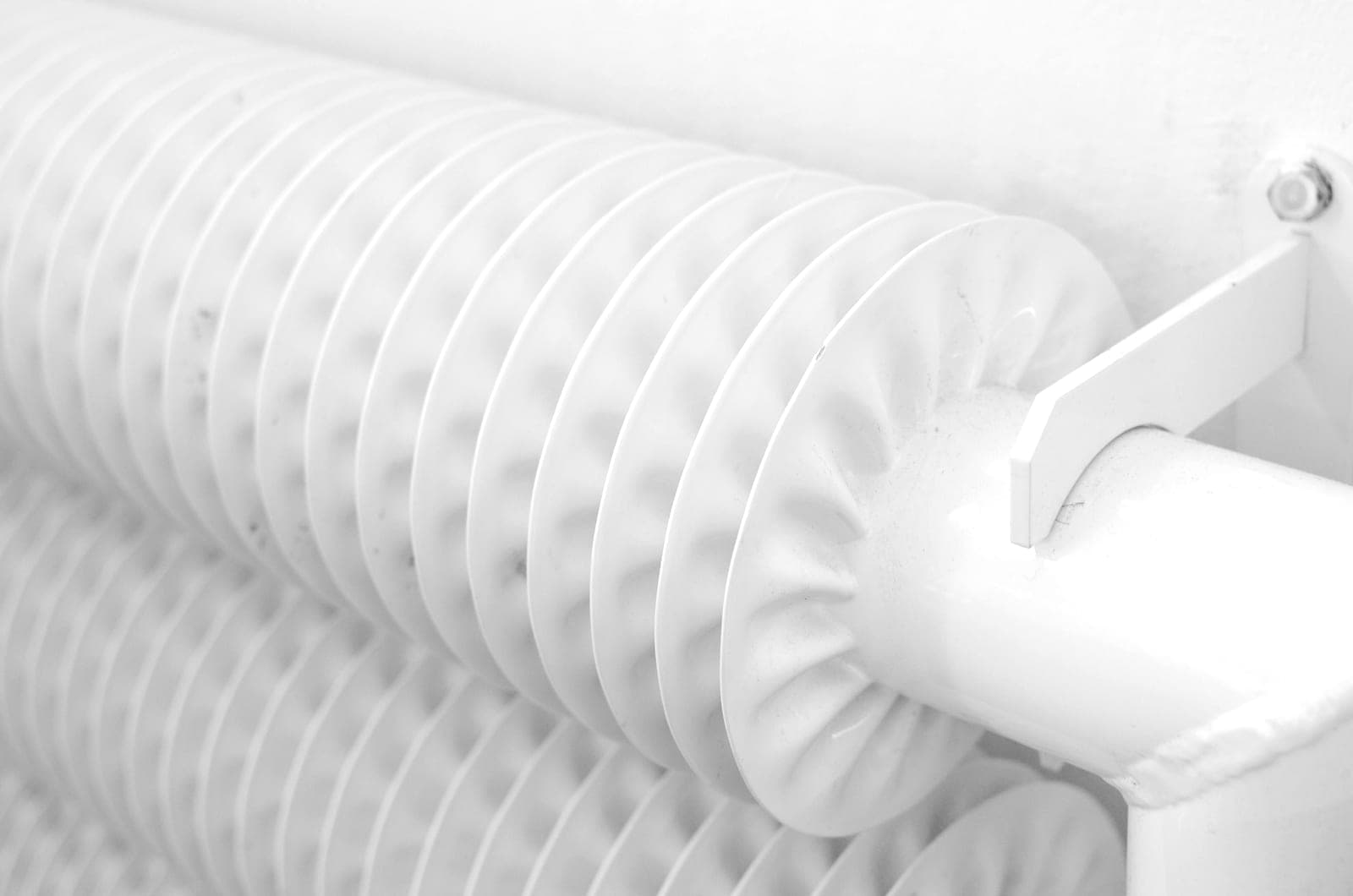
A resistive element sits inside a permanently sealed steel body filled with diathermic oil. The element heats the oil, the oil circulates by convection through the fins, and the fins warm the room by radiation and natural convection. The oil is a heat-transfer medium, not a fuel — it is never consumed and never needs topping up.
That construction is the whole comparison. No fan means silent and no moving air. A large mass of oil and steel means slow to heat and slow to cool. Everything else follows.
Side by side
Oil-filled radiator
Fan / ceramic heater
Noise
Silent — occasional expansion ticking
45–55 dB fan noise typically
Time to feel warmth
20–30 minutes
1–2 minutes
Temperature steadiness
High — the oil coasts between cycles
Lower — warm air disperses quickly
Moves dust
No
Yes
Weight
Heavy — wheels are a requirement
Light, genuinely portable
Surface temperature
Hot to the touch by design
Often cool-touch
Best for
Bedrooms, all-evening rooms
Fast heat, rooms used briefly
Efficiency
~100%
~100%
Cost per hour at 1,500 W
27.5¢
27.5¢
Cost computed at 18.34¢/kWh (EIA, June 2026).
What the thermal mass is actually worth
This is the argument oil-filled radiators are sold on, and it is worth being precise about. The claim that gets made is that the radiator “keeps giving heat for free after it switches off”. The heat it releases while coasting is heat it already paid for — it is stored, not generated. There is no free energy in a steel box.
What is genuinely true is that the stored heat smooths the cycle. A fan heater's output stops the instant the thermostat cuts, so the room temperature starts falling immediately and the thermostat calls again sooner. An oil-filled unit keeps releasing for many minutes, so the room drifts down more gently and the thermostat calls less often. Fewer, longer cycles mean less overshoot, and less overshoot means a slightly lower bill.
The size of that effect is modest — it is a control benefit, not an efficiency one — and it is dwarfed by choosing the right wattage and using a timer. But in a bedroom, where you are asleep for eight hours and temperature swings wake you, the steadiness is worth more than the arithmetic suggests.
If this comparison has convinced you the radiator is the right type, best oil-filled radiator heaters has four picks with the fin-count claim and the thermal-mass claim both worked through. And if the type you are really weighing it against is radiant rather than fan-forced, infrared vs oil-filled is the more useful pairing — those two are close to exact opposites. If you have already settled on Pelonis specifically, its two models compared explains which of the near-identical listings is which.
Where each one wins
Bedroom: oil-filled, comfortably. Silence and steadiness are exactly what that room needs. Bedroom picks.
A room you occupy all evening: oil-filled. The slow start does not matter over four hours.
Bathroom, or any short visit: fan heater. You need warmth in ninety seconds, not half an hour.
A room you move between: fan heater. Oil-filled units are heavy enough that you will not carry one upstairs twice.
Nursery: neither at floor level — the radiator's fins get genuinely hot to the touch. Why.
Allergies or dust sensitivity: oil-filled or micathermic. No fan means nothing airborne.
Picks from both sides
Quick picks
Ranked for fit, not for hype. Coverage and current draw are computed from each unit’s published wattage. Tap a row for the full write-up, or go straight to the listing.
#
Product
Best for
Covers
Draw
Price
1
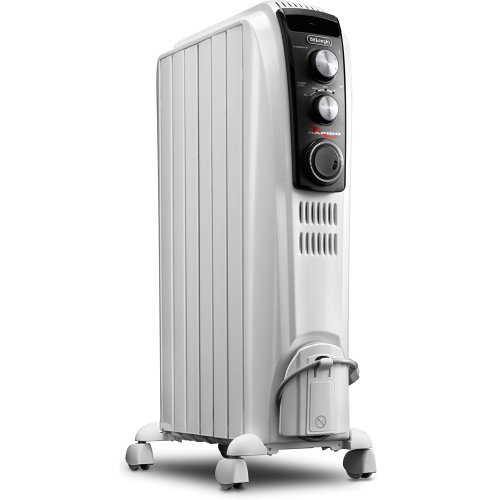
De'Longhi TRD40615TNo fan, so no noise and no moving dust — and the sealed oil keeps radiating after the element cuts out, which is why an oil-filled unit feels steadier than a ceramic one at the same wattage.
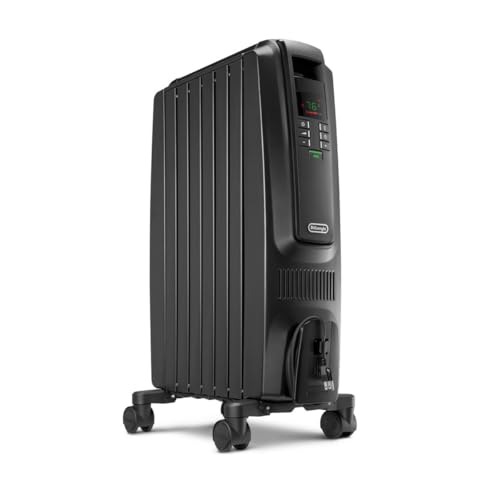
De'Longhi Dragon DigitalThe oil-filled radiator with a programmable timer, which is the version that matters overnight: it can bring a bedroom up before you wake and shut itself off, unattended, without you leaving it running all night.
Dreo Solaris 718The rare heater whose published coverage claim survives the arithmetic: 1,500 W is a genuine 300 sq ft at 10 W/sq ft, and Dreo publishes that number rather than implying more.
De'Longhi HMP1500A micathermic panel is a radiator that gave up its bulk: it radiates like oil-filled and warms up like ceramic, and it is about three inches deep so it can live against a wall.
No fan, so no noise and no moving dust — and the sealed oil keeps radiating after the element cuts out, which is why an oil-filled unit feels steadier than a ceramic one at the same wattage.
Rated power
1,500 W
Covers (computed)
150 sq ft
Draw (computed)
12.5 A at 120 V
Cost per hour
27.5¢
Coverage at 10 W/sq ft, average insulation, 8 ft ceiling = 5,118 BTU/h. Cost at 18.34¢/kWh; an eight-hour night at full output is $2.20. Exceeds the 12 A continuous limit of a 15 A circuit — check what else shares the breaker.
What works
Genuinely silent: there is no fan to hear at 3 a.m.
The oil holds heat, so the room temperature swings less between thermostat cycles
Nothing blows air, so nothing stirs up dust in a bedroom
What does not
Slow. It takes 20–30 minutes to feel like it is doing anything
Heavy — the wheels are not a courtesy, they are a requirement
The surface gets genuinely hot; this is a radiator, not a cool-touch case
Published specification
Rated power
1,500 W at 120 V
Controls
Mechanical, with a programmable 24-hour timer
Fluid
Permanently sealed diathermic oil — never needs refilling
Maker's claim
Up to 75% more radiant surface area
Mobility
Front and rear handles, snap-on wheels
Heat type
Oil-filled
Maker’s coverage claim
None published — the coverage figure above is ours
Safety listing
No listing mark published in the listing text; verify the UL or ETL mark on the rating plate.
Who it is for
A bedroom, a nursery at a safe distance, or anywhere the fan noise of a ceramic heater is the actual problem you are trying to solve.
What it is not for
Fast heat, and not a room you only occupy for twenty minutes. It also should never be tucked beside a bed or curtain — hot surface, 3-foot rule.
De'Longhi Dragon Digital Oil-Filled Radiator (TRD40615EBK)
The oil-filled radiator with a programmable timer, which is the version that matters overnight: it can bring a bedroom up before you wake and shut itself off, unattended, without you leaving it running all night.
Rated power
1,500 W
Covers (computed)
150 sq ft
Draw (computed)
12.5 A at 120 V
Cost per hour
27.5¢
Coverage at 10 W/sq ft, average insulation, 8 ft ceiling = 5,118 BTU/h. Cost at 18.34¢/kWh; an eight-hour night at full output is $2.20. Exceeds the 12 A continuous limit of a 15 A circuit — check what else shares the breaker.
What works
A programmable timer is the honest answer to “can I leave it on overnight” — you don't have to
Silent, like every oil-filled unit: no fan, no moving air
Digital control means you set a temperature, not a knob position
What does not
Costs more than the mechanical TRD40615T for identical heat output
Same slow warm-up as any oil-filled radiator
Heavy and bulky for its coverage — 26 inches of steel you will not be carrying upstairs
Published specification
Rated power
1,500 W at 120 V
Controls
Digital, with a 24-hour programmable timer
ECO function
Regulates power and temperature rather than running at full output
Dimensions
16" x 10" x 26"
Fluid
Permanently sealed diathermic oil
Safety
Child lock, thermal cut-off
Maker's coverage claim
None published — sold as a full-room heater
Heat type
Oil-filled
Maker’s coverage claim
None published — the coverage figure above is ours
Safety listing
No listing mark published in the listing text; verify the UL or ETL mark on the rating plate.
Who it is for
A bedroom where the heater needs to run on a schedule rather than all night, and where noise would wake you.
What it is not for
A room you need warm in five minutes, or a tight space where a hot 26-inch radiator cannot keep 3 feet of clearance.
The rare heater whose published coverage claim survives the arithmetic: 1,500 W is a genuine 300 sq ft at 10 W/sq ft, and Dreo publishes that number rather than implying more.
Rated power
1,500 W
Covers (computed)
150 sq ft
Draw (computed)
12.5 A at 120 V
Cost per hour
27.5¢
Coverage at 10 W/sq ft, average insulation, 8 ft ceiling = 5,118 BTU/h. Cost at 18.34¢/kWh; an eight-hour night at full output is $2.20. Exceeds the 12 A continuous limit of a 15 A circuit — check what else shares the breaker.
What works
A digital thermostat with numbers on it — you can set 68°F rather than guess at a dial
The published 300 sq ft claim matches the standard sizing rule instead of exceeding it
8 lb and 8 inches square: it moves room to room without a project
What does not
1,500 W is 1,500 W — nothing here heats faster than any other 1,500 W heater
Dreo does not publish a noise figure in decibels on the product page
Tall and narrow, which is a tipping profile: the tip-over cutoff matters more here
A living room, bedroom or den at or under 300 sq ft with average insulation and an 8-foot ceiling, where you want to set a temperature and stop thinking about it.
What it is not for
A garage, an uninsulated basement, or anything over about 300 sq ft. It is not under-powered — 1,500 W is the plug-in ceiling — the room is simply too big for one outlet.
A micathermic panel is a radiator that gave up its bulk: it radiates like oil-filled and warms up like ceramic, and it is about three inches deep so it can live against a wall.
Rated power
1,500 W / 750 W low
Covers (computed)
150 sq ft
Draw (computed)
12.5 A at 120 V
Cost per hour
27.5¢
Coverage at 10 W/sq ft, average insulation, 8 ft ceiling = 5,118 BTU/h. Cost at 18.34¢/kWh; an eight-hour night at full output is $2.20. Exceeds the 12 A continuous limit of a 15 A circuit — check what else shares the breaker.
What works
No fan, so no noise and nothing blown around a room
Warms up far faster than an oil-filled radiator of the same wattage
Wall-mountable, which gets it out of the floor space it would otherwise eat
What does not
The panel surface is hot to the touch — this is not a cool-touch design
No published coverage figure
Radiant heat is directional: stand behind it and you will not feel much
Are oil-filled radiators better than space heaters?+
Better for bedrooms and long occupancy, because they are silent and hold temperature steadily. Worse for fast heat and portability. Neither is more efficient — both are about 100%.
Do oil-filled radiators use less electricity?+
Not per hour. They can consume slightly less over an evening because the oil keeps radiating after the element cuts out, so the thermostat cycles less often. The heat released while coasting was already paid for.
How long does an oil-filled radiator take to heat a room?+
Typically 20 to 30 minutes before you feel a difference, because it must warm several kilograms of steel and oil first. A fan heater is noticeable in one to two minutes.
Do you have to refill an oil-filled radiator?+
No. The diathermic oil is permanently sealed and is a heat-transfer medium, not a fuel. It is never consumed and cannot be topped up.
Two real models, six near-identical listings, no model numbers in the titles — and one radiator listed twice at different prices.
Written by Scooter M., an enthusiast — not a tester and not a certified anything. Every figure on this page is either published by the manufacturer, taken from a live retail listing, or computed from the published wattage using the formulas we publish. Found an error? Tell us and we will correct it, visibly and with a date on it.