This is a trick question, and almost every published answer to it is wrong. At the same wattage they all cost the same. Here is what actually varies.
By Scooter M. · Published August 31, 2026 · Last reviewed August 31, 2026
How this page is funded: we earn a commission if you buy through the links here, at no extra cost to you. Picks are chosen before links are attached, which is why every roundup names something to skip. Full disclosure.
There is no cheapest space heater to run. Every resistive electric heater converts essentially 100% of its electricity into heat, so at the same wattage they all cost identically — 27.5 cents an hour for 1,500 W at the U.S. average rate. Savings come from wattage, thermostat accuracy and runtime.
Why the honest answer is a correction
An electric heater has no flue, no exhaust and no combustion. Every watt it draws ends up as heat in the room — including the watts that spun the fan and lit the display, because those become heat too. There is nowhere else for the energy to go. This is about as close to a certainty as consumer-product claims get.
So the marketing claim that a particular element technology is cheaper to run is not a small exaggeration, it is a claim about physics that is not true. It is also why there is no ENERGY STAR category for portable space heaters — a label needs a spread between products to rank, and on this axis there is not one. A ceramic PTC element, an infrared quartz tube, a mica panel and a coil of resistance wire in oil all convert electricity to heat at the same rate, because all of them are converting all of it.
Price does not change this either, which is worth stating because the premium end of the category implies otherwise. A designer machine costing many times a budget tower draws the same 1,500 W from the same outlet and bills you the same 27.5 cents an hour — worked through in our Dyson Hot+Cool review, where the wattage most often quoted online turns out to belong to a different country's model entirely.
Heater type
Watts
Efficiency
Cost per hour
Ceramic (PTC) tower
1,500 W
~100%
27.5¢
Infrared quartz
1,500 W
~100%
27.5¢
Oil-filled radiator
1,500 W
~100%
27.5¢
Micathermic panel
1,500 W
~100%
27.5¢
Fan-forced
1,500 W
~100%
27.5¢
Computed at 18.34¢/kWh (EIA, June 2026). The identical column is the point of the table.
What genuinely varies, in order of size
1. Wattage. This is not subtle and it dwarfs everything else. 750 W costs exactly half of 1,500 W, permanently, with no efficiency penalty. If your room only needs 1,000 W, running 1,500 W is buying overshoot.
2. Runtime. The cheapest kilowatt-hour is one you did not use. A timer that removes six hours from every night removes 75% of a nightly bill. Nothing about the element does anything comparable.
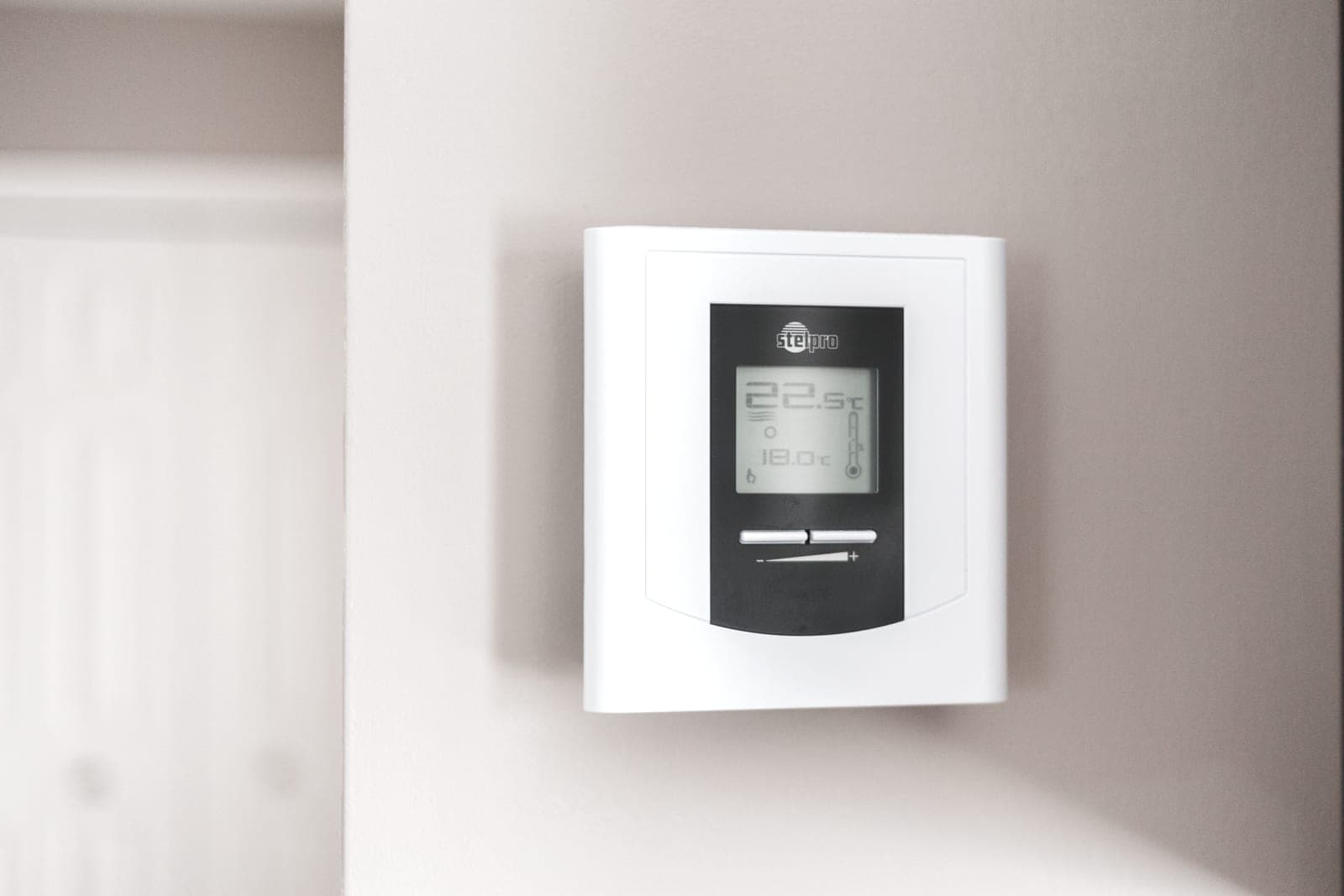
3. Thermostat accuracy. A heater that holds 68°F costs less than one overshooting to 73°F, and the gap compounds every night. This is where a digital thermostat with 1°F increments genuinely pays for itself against an unmarked dial.
4. Thermal mass — a real but small effect. An oil-filled radiator keeps radiating after the element cuts out, so it cycles less often and the room drifts rather than dropping. That is a genuine advantage in steadiness. It is not an efficiency advantage: the heat it releases while coasting is heat it already paid for.
The one real exception: heat pumps
Everything above applies to resistive heating, which is what every space heater in this category is. A heat pump is a different machine: it does not make heat, it moves existing heat from outside to inside, so it can deliver two to four units of heat per unit of electricity consumed. That is the only mainstream technology that beats the 1:1 ceiling, and it is why the heat pump comparison reaches a different conclusion from every other page in this section.
The practical corollary of all this is that a cheap heater is not a worse heater in the way that matters — at equal wattage it puts exactly as much heat in the room as an expensive one. Best budget space heaters takes that to its conclusion and itemises what the extra money buys instead, which turns out to be control, silence and a published safety listing.
Picks, chosen on control rather than element
Quick picks
Ranked for fit, not for hype. Coverage and current draw are computed from each unit’s published wattage. Tap a row for the full write-up, or go straight to the listing.
#
Product
Best for
Covers
Draw
Price
1
Lasko 754201The 900 W low setting is the whole point: it is the rare listing that publishes both settings, so you can compute what the cheap mode actually costs instead of guessing.
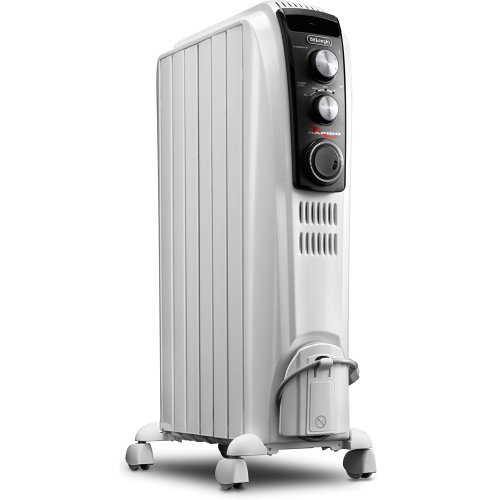
De'Longhi TRD40615TNo fan, so no noise and no moving dust — and the sealed oil keeps radiating after the element cuts out, which is why an oil-filled unit feels steadier than a ceramic one at the same wattage.
Dreo Solaris 718The rare heater whose published coverage claim survives the arithmetic: 1,500 W is a genuine 300 sq ft at 10 W/sq ft, and Dreo publishes that number rather than implying more.
The 900 W low setting is the whole point: it is the rare listing that publishes both settings, so you can compute what the cheap mode actually costs instead of guessing.
Rated power
1,500 W / 900 W low
Covers (computed)
150 sq ft
Draw (computed)
12.5 A at 120 V
Cost per hour
27.5¢
Coverage at 10 W/sq ft, average insulation, 8 ft ceiling = 5,118 BTU/h. Cost at 18.34¢/kWh; an eight-hour night at full output is $2.20. Exceeds the 12 A continuous limit of a 15 A circuit — check what else shares the breaker.
What works
Both wattages are published, which is what makes an honest cost comparison possible
9 inches tall: it fits under a desk without being in the way
Manual top-mounted controls — nothing to relearn, nothing to lose the remote for
What does not
A dial thermostat with no numbers on it: you cannot set 68°F, only “about there”
No child lock, so the dial is reachable by anyone who can reach the unit
Fan noise is the price of a small ceramic unit moving 1,500 W of heat
ETL listed, per Lasko's published specification — one of the few in this roundup that names a mark rather than leaving it to the rating plate.
Who it is for
A desk, a small office, a dorm room — somewhere you want heat on a person rather than in a room.
What it is not for
A nursery, and not unattended use. It publishes a tip-over switch and overheat protection, but no child lock — and the USFA's advice to switch a heater off when you leave the room applies to every unit on this site, listed or not.
No fan, so no noise and no moving dust — and the sealed oil keeps radiating after the element cuts out, which is why an oil-filled unit feels steadier than a ceramic one at the same wattage.
Rated power
1,500 W
Covers (computed)
150 sq ft
Draw (computed)
12.5 A at 120 V
Cost per hour
27.5¢
Coverage at 10 W/sq ft, average insulation, 8 ft ceiling = 5,118 BTU/h. Cost at 18.34¢/kWh; an eight-hour night at full output is $2.20. Exceeds the 12 A continuous limit of a 15 A circuit — check what else shares the breaker.
What works
Genuinely silent: there is no fan to hear at 3 a.m.
The oil holds heat, so the room temperature swings less between thermostat cycles
Nothing blows air, so nothing stirs up dust in a bedroom
What does not
Slow. It takes 20–30 minutes to feel like it is doing anything
Heavy — the wheels are not a courtesy, they are a requirement
The surface gets genuinely hot; this is a radiator, not a cool-touch case
Published specification
Rated power
1,500 W at 120 V
Controls
Mechanical, with a programmable 24-hour timer
Fluid
Permanently sealed diathermic oil — never needs refilling
Maker's claim
Up to 75% more radiant surface area
Mobility
Front and rear handles, snap-on wheels
Heat type
Oil-filled
Maker’s coverage claim
None published — the coverage figure above is ours
Safety listing
No listing mark published in the listing text; verify the UL or ETL mark on the rating plate.
Who it is for
A bedroom, a nursery at a safe distance, or anywhere the fan noise of a ceramic heater is the actual problem you are trying to solve.
What it is not for
Fast heat, and not a room you only occupy for twenty minutes. It also should never be tucked beside a bed or curtain — hot surface, 3-foot rule.
The rare heater whose published coverage claim survives the arithmetic: 1,500 W is a genuine 300 sq ft at 10 W/sq ft, and Dreo publishes that number rather than implying more.
Rated power
1,500 W
Covers (computed)
150 sq ft
Draw (computed)
12.5 A at 120 V
Cost per hour
27.5¢
Coverage at 10 W/sq ft, average insulation, 8 ft ceiling = 5,118 BTU/h. Cost at 18.34¢/kWh; an eight-hour night at full output is $2.20. Exceeds the 12 A continuous limit of a 15 A circuit — check what else shares the breaker.
What works
A digital thermostat with numbers on it — you can set 68°F rather than guess at a dial
The published 300 sq ft claim matches the standard sizing rule instead of exceeding it
8 lb and 8 inches square: it moves room to room without a project
What does not
1,500 W is 1,500 W — nothing here heats faster than any other 1,500 W heater
Dreo does not publish a noise figure in decibels on the product page
Tall and narrow, which is a tipping profile: the tip-over cutoff matters more here
A living room, bedroom or den at or under 300 sq ft with average insulation and an 8-foot ceiling, where you want to set a temperature and stop thinking about it.
What it is not for
A garage, an uninsulated basement, or anything over about 300 sq ft. It is not under-powered — 1,500 W is the plug-in ceiling — the room is simply too big for one outlet.
What is the cheapest type of space heater to run?+
None of them is cheaper than another at the same wattage. All electric resistance heaters are about 100% efficient. The cheapest heater to run is the one with the lowest wattage that still holds your room, on a timer.
Are oil-filled radiators cheaper to run than ceramic heaters?+
Not per hour — 1,500 W is 1,500 W. They can use slightly less over an evening because the oil keeps radiating after the element cuts out, so the thermostat cycles less often. The effect is real but modest.
Do infrared heaters cost less to run?+
Per kilowatt-hour consumed, no. They can result in lower consumption because radiant heat makes a person feel warm without raising the whole room's air temperature, so you may run them at a lower setting or for less time.
How can I lower my space heater running costs?+
Use the lowest wattage setting that holds the room, put it on a timer, set an accurate thermostat rather than a dial, close the door, and turn the whole-house system down while the heater runs.
1,500 W is a cap, not a feature. Identical heat, identical cost — so what is left to choose on?
Written by Scooter M., an enthusiast — not a tester and not a certified anything. Every figure on this page is either published by the manufacturer, taken from a live retail listing, or computed from the published wattage using the formulas we publish. Found an error? Tell us and we will correct it, visibly and with a date on it.