On a 120 V outlet the Dyson makes exactly as much heat as every other plug-in heater on this site. So the question is not which heater beats it, but which of the three jobs it does you are actually paying for.
By Scooter M. · Published November 21, 2026 · Last reviewed November 21, 2026
How this page is funded: we earn a commission if you buy through the links here, at no extra cost to you. Picks are chosen before links are attached, which is why every roundup names something to skip. Full disclosure.
If what you want is the Dyson's heat, the alternative is the Dreo Solaris 718 — the same 1,500 W, a published thermostat range and a published child lock, at a fraction of the price. If you want its silence, no fan heater will do it and the De'Longhi TRD40615T radiator will, because it has no fan at all. If you want its build and its warranty, the Vornado VMHi500 is a metal-cabinet heater with a five-year guarantee. And if you want one machine that heats, blows cool air and filters it, keep the Dyson — nothing on this page replaces all three, and we are not going to pretend otherwise.
Start here: the Dyson is not a more powerful heater
This is the fact that makes the whole page simple. A standard US 120 V outlet supports a 1,500 W appliance, and every plug-in heater sold in the US is therefore capped at 1,500 W — the Dyson included. 1,500 W is 5,118 BTU/h, it covers about 150 sq ft at 10 watts per square foot, and it costs 27.5 cents an hour to run at the national average electricity rate. Those four numbers are identical for a $450 Dyson and a $23 ceramic heater.
What you are actually paying for, job by job
Heats 150 sq ft
Summer fan
HEPA filtration
App / schedule
No exposed element
Published dB
Dyson Purifier Hot+Cool HP1
Yes — 1,500 W
Yes
Yes
Yes
Yes
No
Dreo Solaris 718
Yes — 1,500 W
Fan mode
No
Yes
Grille
No
Vornado VMHi500
Yes — 1,500 W
Fan-only mode
No
No
Metal grille
No
De'Longhi TRD40615T
Yes — 1,500 W
No
No
No
No fan at all
No — silent by design
Lasko Ellipse CT18950
Yes — 1,500 W
Two fan settings
No
No
Grille
No
Dreo WH517S
Yes — 1,500 W
Fan-only mode
No
Yes
Wall-mounted
Yes — 28 dB
What each machine replaces. "Heat" is identical across every row because 1,500 W at 120 V is a hard ceiling; the differences are everywhere else.
Read the filtration column and the decision usually makes itself. The HEPA filter is the only thing in that table that no other machine here provides, and it is also the thing people most often forget they are paying for. If you genuinely want purification, the Dyson earns its price by being one object instead of three. If you do not, you are paying several hundred dollars for a fan housing and a design.
The three things the Dyson does better, stated plainly
It is three appliances. A heater for four months, a fan for four months, a purifier for twelve. Owning one object rather than three is a real benefit in a small flat, and no combination of cheap heaters delivers it.
There is no exposed element and no grille to poke. The heat comes out of a smooth loop with the working parts in the base. Around a curious child that is a genuinely different proposition from a glowing element behind a wire grille, and it is the one safety advantage that cannot be replicated at a lower price.
The build, the app and the support are not in the same conversation as a $40 tower. Dyson publishes firmware updates, sells filters for years, and answers the phone. That is worth money to some people and nothing to others, and it is not our place to tell you which you are.
And the two it does not
It does not publish a decibel figure, and neither Dyson's listing nor its marketing commits to one for heating mode. In a bedroom that is the number that decides whether a heater survives week two, and the only heater on this page that publishes one is the Dreo WH517S at 28 dB on its lowest setting. If quiet is the brief, the quiet roundup ranks everything we track on published noise, and the fanless types win it outright.
It does not publish a listing mark in its retail listing either — which surprises people, because the price implies paperwork. Checking the rating plate is the answer for the Dyson exactly as it is for a $23 heater, and UL versus ETL explains what you are looking for.
The alternatives
Quick picks
Ranked for fit, not for hype. Coverage and current draw are computed from each unit’s published wattage. Tap a row for the full write-up, or go straight to the listing.
#
Product
Best for
Covers
Draw
Price
1
Dreo Solaris 718The rare heater whose published coverage claim survives the arithmetic: 1,500 W is a genuine 300 sq ft at 10 W/sq ft, and Dreo publishes that number rather than implying more.
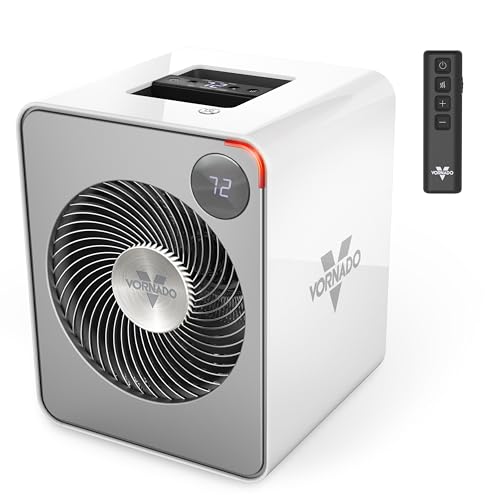
Vornado VMHi500The current top of Vornado's metal line: auto-climate control, two LED displays and a 1-12 hour timer in a cool-touch metal box, backed by five years.
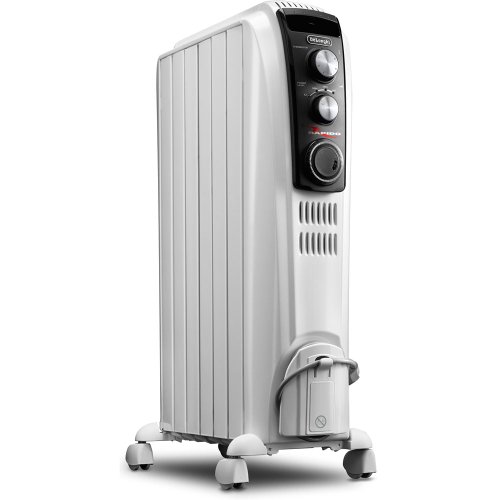
De'Longhi TRD40615TNo fan, so no noise and no moving dust — and the sealed oil keeps radiating after the element cuts out, which is why an oil-filled unit feels steadier than a ceramic one at the same wattage.
Lasko Ellipse CT18950The short Ellipse tower is the one that publishes the two things the taller Laskos do not: a tip-over switch and a child lock, on top of a digital display and wide oscillation.
The only tower here with both cutoffs and a child lock
Dreo WH517SThe cheapest genuinely verifiable smart heater here, and the only one in the category that publishes a noise figure — 28 dB on its lowest setting.
The rare heater whose published coverage claim survives the arithmetic: 1,500 W is a genuine 300 sq ft at 10 W/sq ft, and Dreo publishes that number rather than implying more.
Rated power
1,500 W
Covers (computed)
150 sq ft
Draw (computed)
12.5 A at 120 V
Cost per hour
27.5¢
Coverage at 10 W/sq ft, average insulation, 8 ft ceiling = 5,118 BTU/h. Cost at 18.34¢/kWh; an eight-hour night at full output is $2.20. Exceeds the 12 A continuous limit of a 15 A circuit — check what else shares the breaker.
What works
A digital thermostat with numbers on it — you can set 68°F rather than guess at a dial
The published 300 sq ft claim matches the standard sizing rule instead of exceeding it
8 lb and 8 inches square: it moves room to room without a project
What does not
1,500 W is 1,500 W — nothing here heats faster than any other 1,500 W heater
Dreo does not publish a noise figure in decibels on the product page
Tall and narrow, which is a tipping profile: the tip-over cutoff matters more here
A living room, bedroom or den at or under 300 sq ft with average insulation and an 8-foot ceiling, where you want to set a temperature and stop thinking about it.
What it is not for
A garage, an uninsulated basement, or anything over about 300 sq ft. It is not under-powered — 1,500 W is the plug-in ceiling — the room is simply too big for one outlet.
The current top of Vornado's metal line: auto-climate control, two LED displays and a 1-12 hour timer in a cool-touch metal box, backed by five years.
Rated power
1,500 W
Covers (computed)
150 sq ft
Draw (computed)
12.5 A at 120 V
Cost per hour
27.5¢
Coverage at 10 W/sq ft, average insulation, 8 ft ceiling = 5,118 BTU/h. Cost at 18.34¢/kWh; an eight-hour night at full output is $2.20. Exceeds the 12 A continuous limit of a 15 A circuit — check what else shares the breaker.
What works
Auto-Climate Control adjusts output to hold a temperature rather than running flat out — the cycling behavior that genuinely lowers consumption
A 1–12 hour timer means it can stop on its own, which is the only reliable way an overnight heater saves money
Five years on a heater at this price is a costed commitment, not a marketing line
What does not
Vornado publishes no wattage and no coverage figure, so every sizing and cost number here is ours, computed from the retail-listed 1,500 W
No child lock is published — the same gap the rest of Vornado's range has, and it is disqualifying for a nursery
It is a fan heater in a metal box: moving air is the mechanism and you will hear it
Published specification
Rated power
1,500 W at 120 V (retail listings; Vornado publishes settings, not watts)
Heat settings
2, plus fan-only
Thermostat
Auto-Climate Control, digital
Timer
1–12 hours
Display
Two LED displays, for reading it from across the room
Housing
Cool-touch, powder-coated gloss metal cabinet with cord storage
Safety
Tip-over protection and a 2-stage auto shutoff
Warranty
5-year satisfaction guarantee
Heat type
Fan-forced
Maker’s coverage claim
None published — the coverage figure above is ours
Safety listing
Vornado publishes tip-over protection and a 2-stage auto shutoff but does not name a listing mark; check the rating plate.
Who it is for
A living room or bedroom where the heater is permanent and visible, and where a real thermostat, a timer and a cool metal shell are worth paying for over a plastic tower.
What it is not for
A nursery, because no child lock is published; and not silence, which means an oil-filled radiator instead.
No fan, so no noise and no moving dust — and the sealed oil keeps radiating after the element cuts out, which is why an oil-filled unit feels steadier than a ceramic one at the same wattage.
Rated power
1,500 W
Covers (computed)
150 sq ft
Draw (computed)
12.5 A at 120 V
Cost per hour
27.5¢
Coverage at 10 W/sq ft, average insulation, 8 ft ceiling = 5,118 BTU/h. Cost at 18.34¢/kWh; an eight-hour night at full output is $2.20. Exceeds the 12 A continuous limit of a 15 A circuit — check what else shares the breaker.
What works
Genuinely silent: there is no fan to hear at 3 a.m.
The oil holds heat, so the room temperature swings less between thermostat cycles
Nothing blows air, so nothing stirs up dust in a bedroom
What does not
Slow. It takes 20–30 minutes to feel like it is doing anything
Heavy — the wheels are not a courtesy, they are a requirement
The surface gets genuinely hot; this is a radiator, not a cool-touch case
Published specification
Rated power
1,500 W at 120 V
Controls
Mechanical, with a programmable 24-hour timer
Fluid
Permanently sealed diathermic oil — never needs refilling
Maker's claim
Up to 75% more radiant surface area
Mobility
Front and rear handles, snap-on wheels
Heat type
Oil-filled
Maker’s coverage claim
None published — the coverage figure above is ours
Safety listing
No listing mark published in the listing text; verify the UL or ETL mark on the rating plate.
Who it is for
A bedroom, a nursery at a safe distance, or anywhere the fan noise of a ceramic heater is the actual problem you are trying to solve.
What it is not for
Fast heat, and not a room you only occupy for twenty minutes. It also should never be tucked beside a bed or curtain — hot surface, 3-foot rule.
The short Ellipse tower is the one that publishes the two things the taller Laskos do not: a tip-over switch and a child lock, on top of a digital display and wide oscillation.
Rated power
1,500 W
Covers (computed)
150 sq ft
Draw (computed)
12.5 A at 120 V
Cost per hour
27.5¢
Coverage at 10 W/sq ft, average insulation, 8 ft ceiling = 5,118 BTU/h. Cost at 18.34¢/kWh; an eight-hour night at full output is $2.20. Exceeds the 12 A continuous limit of a 15 A circuit — check what else shares the breaker.
What works
A published tip-over switch AND a published child lock — no other tower in this registry publishes both, and they are exactly what a tall heater in a family room needs
An 18-inch tower has a lower center of gravity than the 23- and 30-inch units it competes with
Digital display, thermostat, remote and a timer at a price close to the simpler towers
What does not
Lasko's own product page for this model was unreachable when we checked, so every figure here is from the retail listing rather than the manufacturer
The wattage of the three heat modes is not published, so only the 1,500 W maximum can be costed
No coverage claim and no listing mark named — at 1,500 W our own figure is 150 sq ft either way
Published specification
Rated power
1,500 W at 120 V
Heat modes
Three, plus two fan settings; the per-mode wattage is not published
Controls
Digital display, thermostat, remote, timer
Oscillation
Wide oscillation
Height
18"
Safety
Tip-over switch and child lock, both published in the listing
Heat type
Ceramic (PTC)
Maker’s coverage claim
None published — the coverage figure above is ours
Safety listing
The listing publishes a tip-over switch and a child lock but names no UL or ETL mark. Lasko's own product page for this model could not be reached, so check the rating plate on the unit.
Who it is for
A living room, family room or home office where children or animals move past the heater and a tip-over switch plus a child lock are worth more than an extra five inches of tower.
What it is not for
Anyone who needs to compute the cost of a low setting, or who wants the manufacturer's own specification sheet before buying — for this model it was not reachable.
The cheapest genuinely verifiable smart heater here, and the only one in the category that publishes a noise figure — 28 dB on its lowest setting.
Rated power
1,500 W
Covers (computed)
150 sq ft
Draw (computed)
12.5 A at 120 V
Cost per hour
27.5¢
Coverage at 10 W/sq ft, average insulation, 8 ft ceiling = 5,118 BTU/h. Cost at 18.34¢/kWh; an eight-hour night at full output is $2.20. Exceeds the 12 A continuous limit of a 15 A circuit — check what else shares the breaker.
What works
Publishes 28 dB. Almost nothing in this category publishes a decibel figure at all, and on a heater destined for a bedroom wall it is the number that decides whether you keep it
An IP24 ingress rating is published, which is unusual and relevant if the wall in question is in a bathroom
The least expensive heater here that has a model number, a manufacturer page and a real specification behind it
What does not
Per-setting wattages are not published, so only the 1,500 W maximum can be costed
No UL or ETL mark published by Dreo. IP24 is water-ingress protection and is not a substitute for a safety listing
Wall-mounted: it needs fixing to a wall, which rules it out of most rentals
Published specification
Rated power
1,500 W at 120 V (Dreo publishes “1500W Max” and 3 heat settings, not their wattages)
Thermostat
41–95°F, 1°F increments (Dreo's published figure)
Smart control
Wi-Fi, Dreo app, Alexa and Google Home
Noise
28 dB, published in the listing (lowest setting)
Ingress rating
IP24, published in the listing
Other modes
ECO mode, fan-only
Mounting
Wall-mounted — not a portable unit
Heat type
Ceramic (PTC)
Maker’s coverage claim
None published — the coverage figure above is ours
Safety listing
Dreo's product page does not publish a UL or ETL mark for this model. The listing does publish an IP24 ingress rating, which is a different thing and is not a safety listing.
Who it is for
A bedroom, small office or bathroom wall where quiet matters and you want app control and a schedule at the lowest price that is still verifiable.
What it is not for
Anywhere you need to move the heater, and not a room where you need a published safety listing before you buy — check the rating plate first.
Matched on what the Dyson is actually bought for, one job at a time. A single heater cannot replace a purifier, a summer fan and a heater at once, so each pick replaces one of those jobs well rather than all of them badly.
Heat output treated as a constant. Every plug-in heater here, Dyson included, is 1,500 W at 120 V and produces 5,118 BTU/h. No pick is ranked on heating more, because none of them can.
Published specifications only — a decibel figure, a thermostat range, a warranty, a listing mark. Where the maker publishes nothing, the card says so, and that includes the Dyson.
No disparagement and no testing claims. We have not run any of these side by side. What the Dyson does that these do not is stated as plainly as what it does not.
Running cost computed at 18.34¢/kWh from rated wattage, which is where the real difference between these machines disappears entirely.
And what we did not do: we have not tested these units, owned them, measured them or run them in a room. Everything above is compiled from published manufacturer specifications and live retail listings, with the electrical load, room coverage and running cost computed by us from the published wattage. The full method.
What we’d skip, and why
Every roundup on this site names something to skip. It costs us nothing to publish and it is the fastest way to tell whether a buying guide was written for you or for its commission.
Any heater sold as a Dyson-style "bladeless" heater at a bargain price
Bladeless is a description of the housing, not of a heating technology. Every fan heater has an impeller somewhere; the Dyson's is in the base, which is genuinely safer around fingers but makes no difference to the heat. A cheap unit advertised as bladeless is usually a plain ceramic fan heater in a hoop-shaped case, with the same element and a shorter warranty — and the safety features that actually matter are the ones on the safest roundup: a tip-over switch, a thermal cut-off and a child lock, all published.
Expecting "cool" to mean air conditioning
The Dyson's cooling is a fan. It moves air, which makes a person feel cooler by evaporation and convection; it removes no heat from the room, and running it adds its own motor heat. That is not a criticism of Dyson — it is sold as a fan and it is an excellent one — but it is the single most common misreading of the product, and if you want a room to be colder you want an air conditioner, which this site does not cover.
Replacing a purifier with a heater and hoping
If the reason the Dyson is on your list is the HEPA filtration, no heater on this page substitutes for it and none of them claims to. Buy a purifier and a heater separately; two good single-purpose machines cost less than one three-in-one and each can be replaced on its own schedule. Our picks below replace the heating and the fan, not the filter.
What any of these costs to run, which is the same thing
How you run it
Per hour
Per day
Per 30-day month
4 h/day
27.5¢
$1.10
$33.01
8 h/day
27.5¢
$2.20
$66.02
Continuous
27.5¢
$6.60
$198.07
All six machines, including the Dyson, are 1,500 W at 120 V. Computed at 18.34¢/kWh — the U.S. residential average for June 2026 (EIA, Electric Power Monthly, Table 5.6.A).
A $450 heater and a $70 heater cost the same $66 a month to run at eight hours a day. The purchase price is a one-off and the running cost is the recurring one, which means the cheaper heater's advantage never compounds — it is a single saving, and if the dearer machine genuinely holds the room closer to its set-point it will claw some of that back in hours not run. Why no heater is cheaper to run is the argument in full.
Which one is right for you
You wanted the quiet. Buy a fanless radiator — the De'Longhi below, or anything on the oil-filled roundup. A heater with no fan cannot make fan noise, which no amount of engineering on a fan heater achieves.
You wanted the app. The Dreo Solaris 718 and the Dreo WH517S both schedule from a phone, and the smart roundup is explicit that scheduling is the feature that lowers a bill while voice control is the one that does not.
You wanted the looks and the floor space. A wall-mounted unit removes the object from the room entirely — the wall-mounted roundup for the plug-in versions, and in-wall if you are willing to have one recessed.
You wanted it to be safe around children. The Lasko Ellipse publishes a tip-over switch and a child lock, which is the combination the nursery page is built around. That is a different kind of safe from the Dyson's enclosed element, and in most homes it is the more useful one.
You wanted the purifier. Buy the Dyson, or buy a purifier and a cheap heater. There is no third answer and nothing on this page pretends there is.
Questions people actually ask
What is the best alternative to a Dyson Hot+Cool?+
For heating, the Dreo Solaris 718: the same 1,500 W and 5,118 BTU/h, with a published thermostat range and a published child lock, for a fraction of the price. For silence, a De'Longhi oil-filled radiator, because it has no fan. For build quality and warranty, the Vornado VMHi500's metal cabinet and five-year guarantee. Nothing replaces the HEPA filtration — for that, the Dyson or a separate purifier.
Is the Dyson Hot+Cool worth it as a heater?+
Not on heat per dollar. On a US 120 V outlet it is capped at 1,500 W like every other plug-in heater, so it produces the same 5,118 BTU/h and costs the same 27.5 cents an hour to run as a $23 ceramic heater. It is worth it if you want one machine that heats in winter, blows cool air in summer and filters the air all year, and if the enclosed, element-free housing matters to you.
Does a bladeless heater heat better than a normal one?+
No. Bladeless describes where the impeller sits, not how the heat is made — the element is a resistance element either way and the output is set by the wattage. What the design genuinely buys is a housing with no exposed element and no grille, which is a safety benefit around small children and nothing at all to do with heating performance.
Does the Dyson Hot+Cool actually cool a room?+
It is a fan, so it makes a person feel cooler by moving air across their skin; it removes no heat from the room and, like any motor, adds a little. If you need a room to be colder, that is an air conditioner's job. Plenty of cheaper heaters here include a fan-only mode that does the same thing for the same reason.
Why is the Dyson listed as 2,250 watts in some places?+
Because that is the UK and EU model on a 230 V supply. The US unit is carried as 1,500 W, which is what a standard 120 V outlet allows, and it is the figure every cost and coverage number on this site is computed from. Articles that mix regional specification sheets are the usual source of the confusion.
Is a cheaper heater cheaper to run than a Dyson?+
No — at the same wattage every electric heater costs the same per hour, because the bill is kilowatt-hours and all resistance heating is essentially 100% efficient. At 18.34¢/kWh that is 27.5 cents an hour or about $66 a month at eight hours a day, whatever the machine cost. The only heater that is cheaper to run is one that runs fewer hours, which is a thermostat question.
A child lock, a metal cabinet, a published ETL mark, a 28 dB figure — six heaters that each bring one of them in under $100.
Written by Scooter M., an enthusiast — not a tester and not a certified anything. Every figure on this page is either published by the manufacturer, taken from a live retail listing, or computed from the published wattage using the formulas we publish. Found an error? Tell us and we will correct it, visibly and with a date on it.